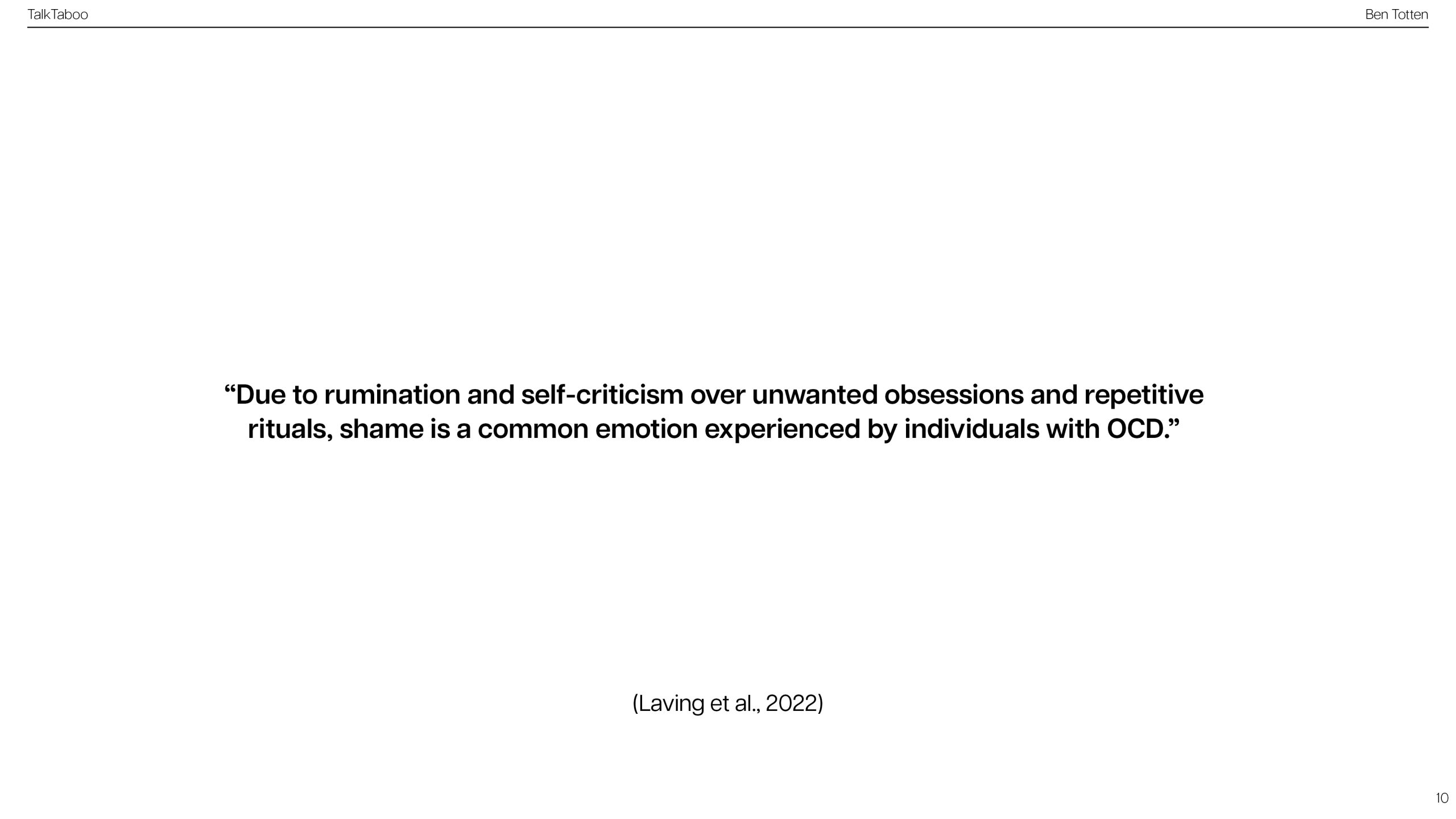
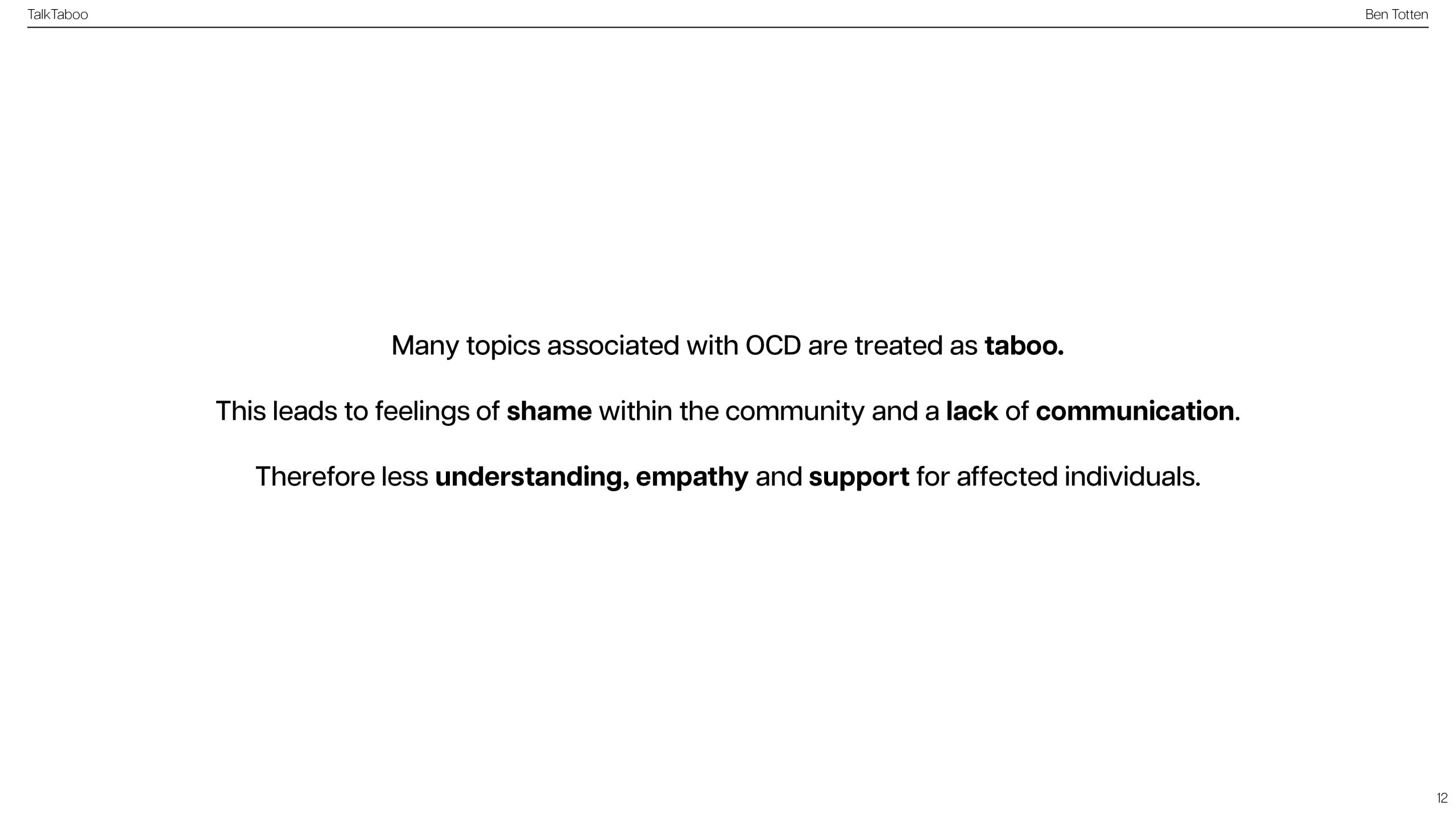
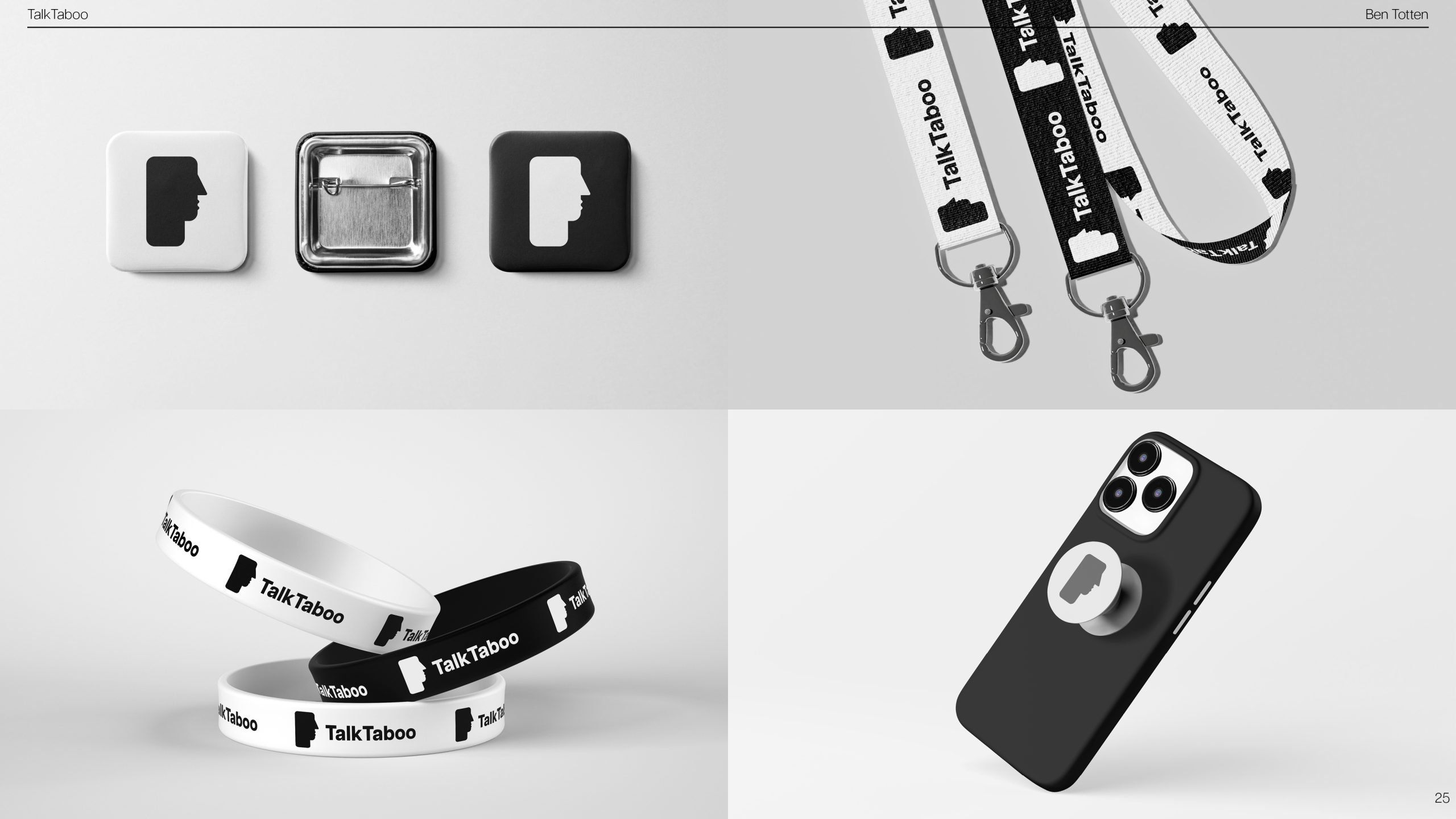
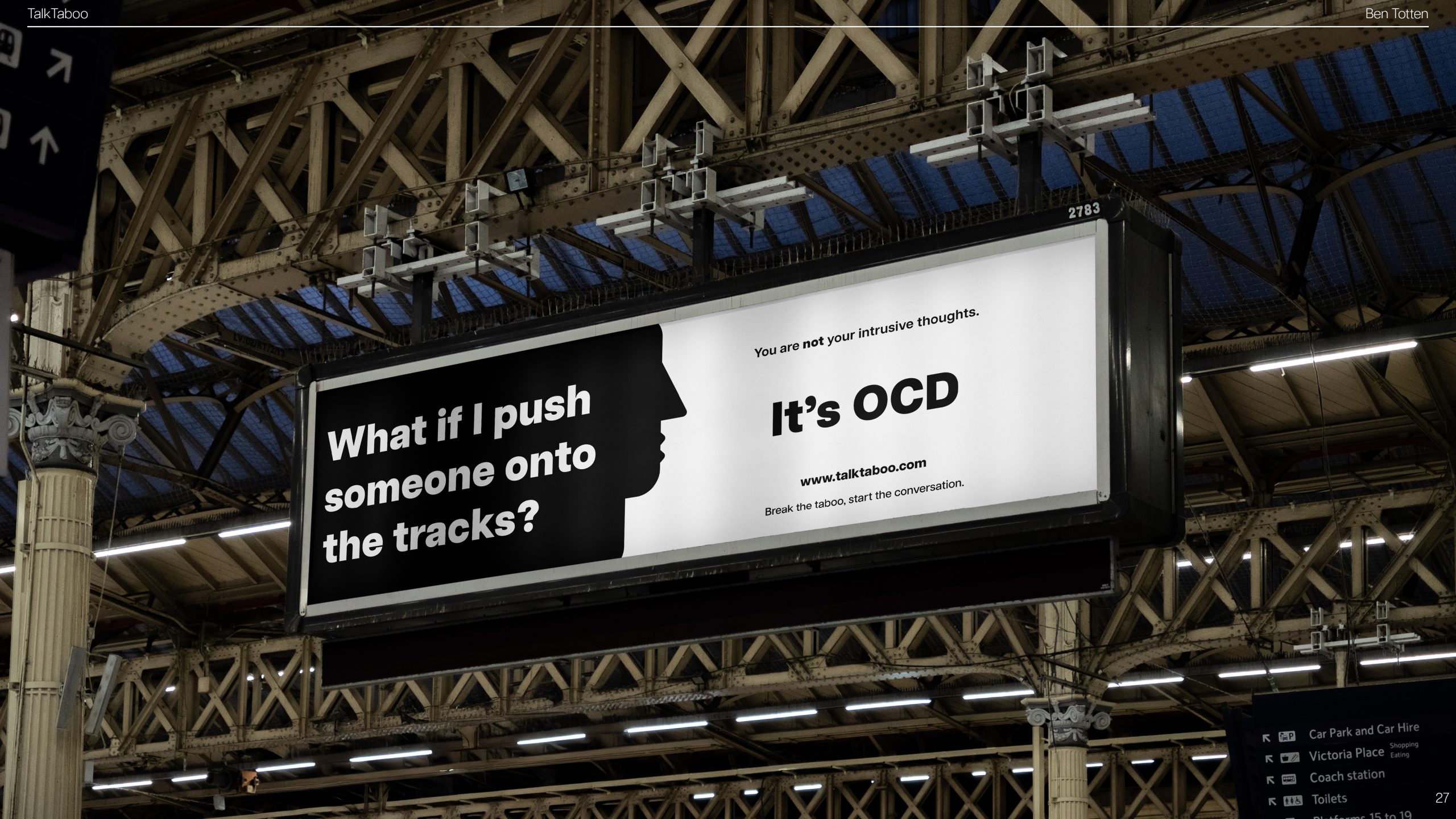
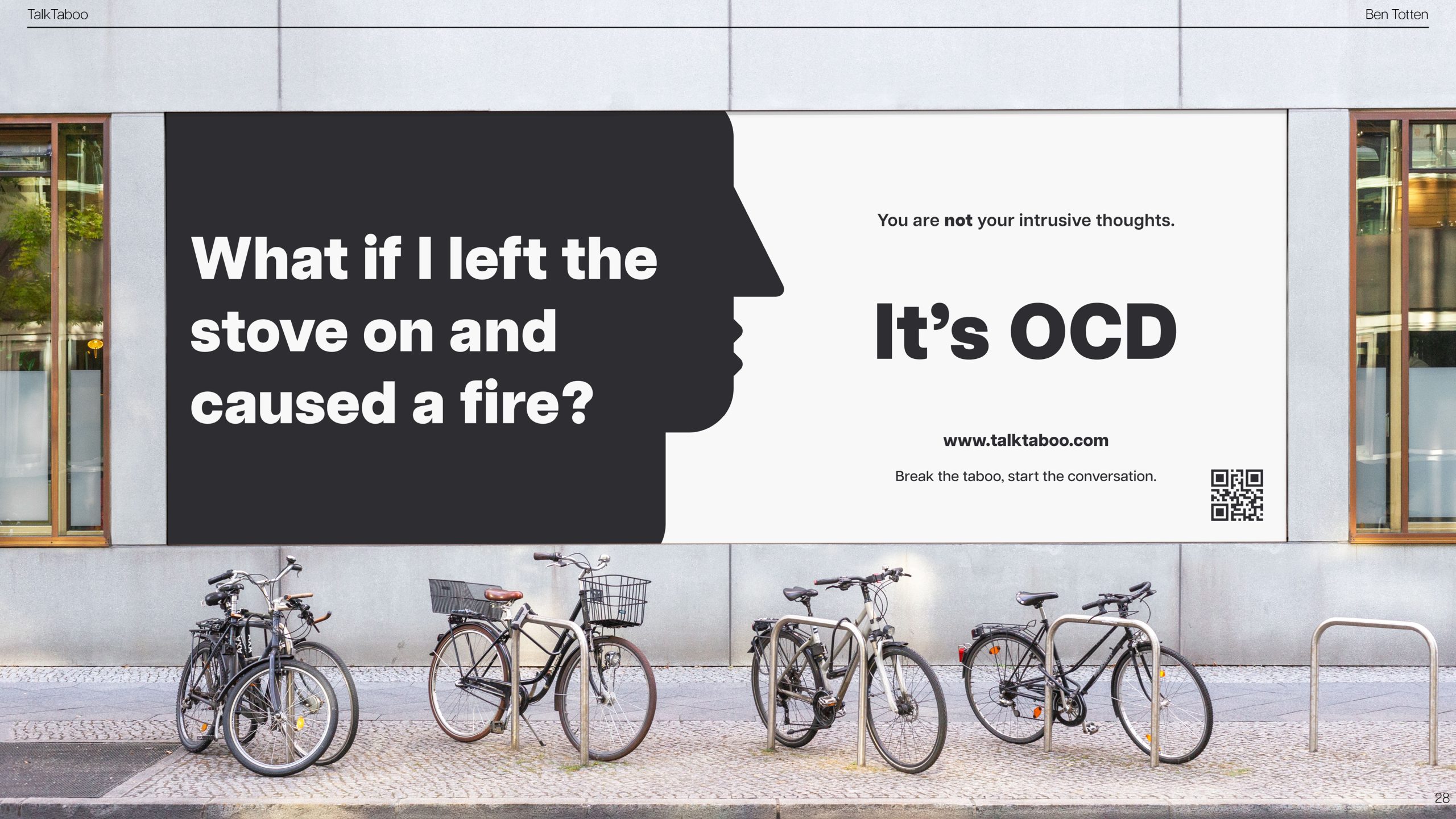
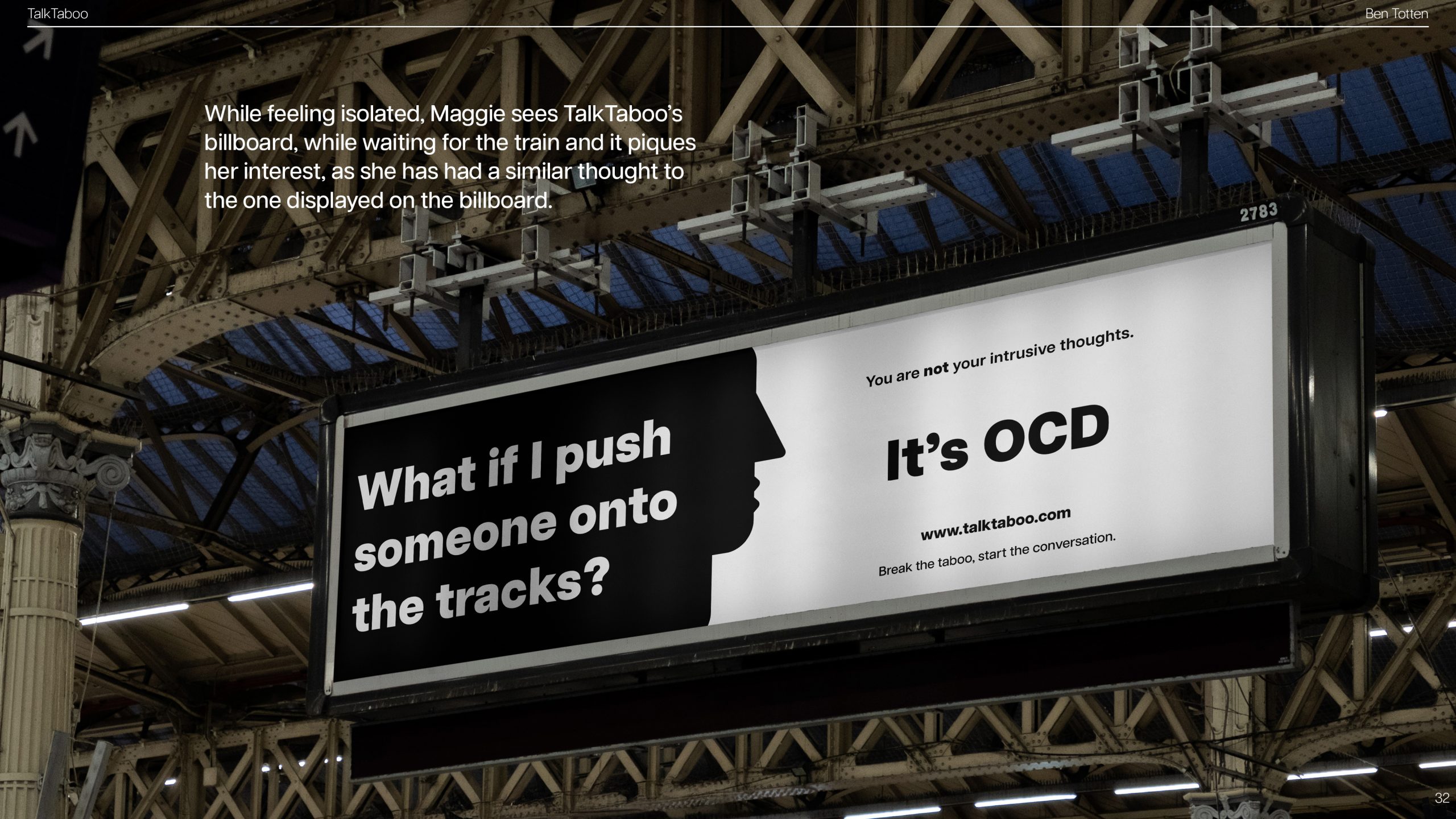
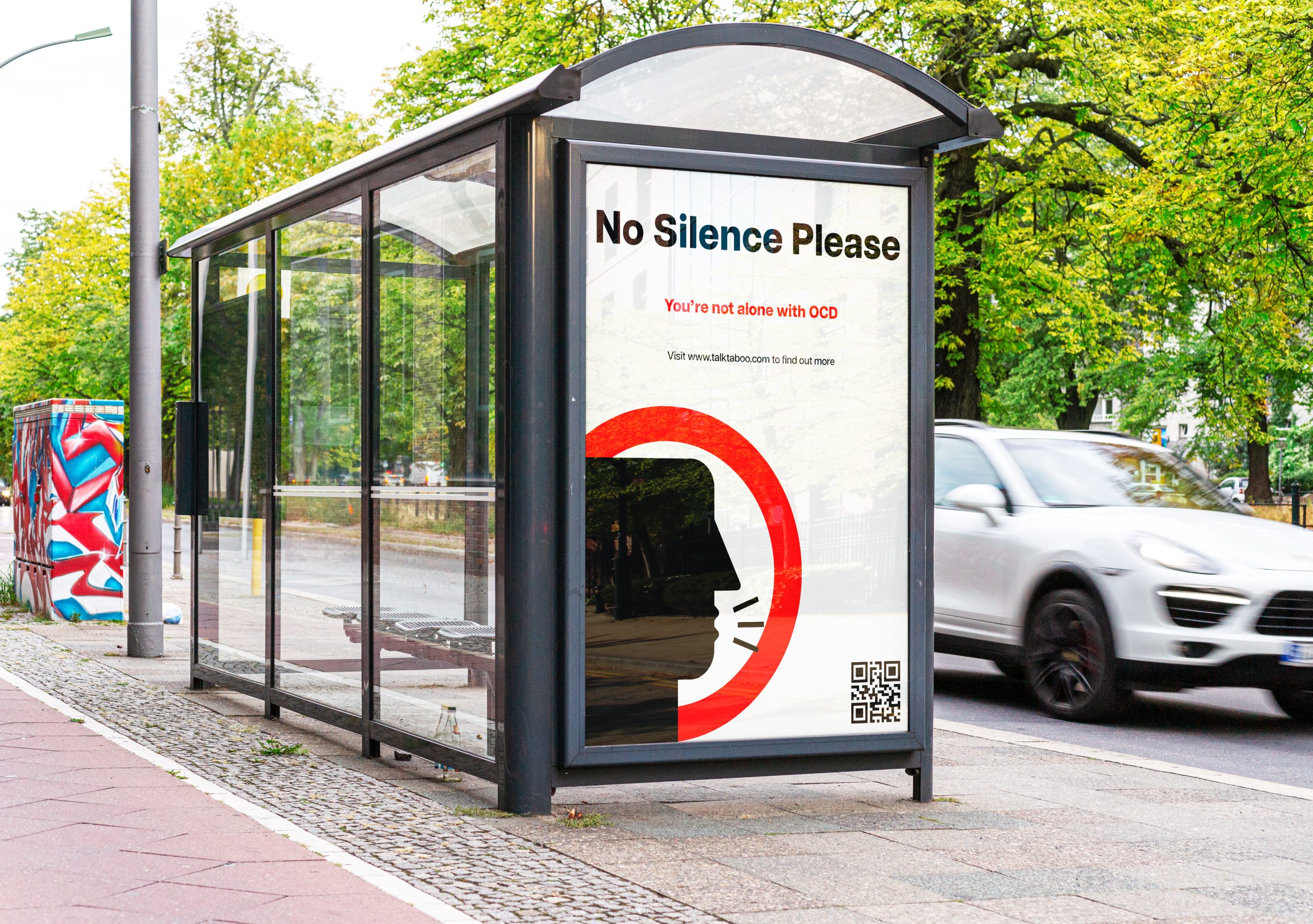
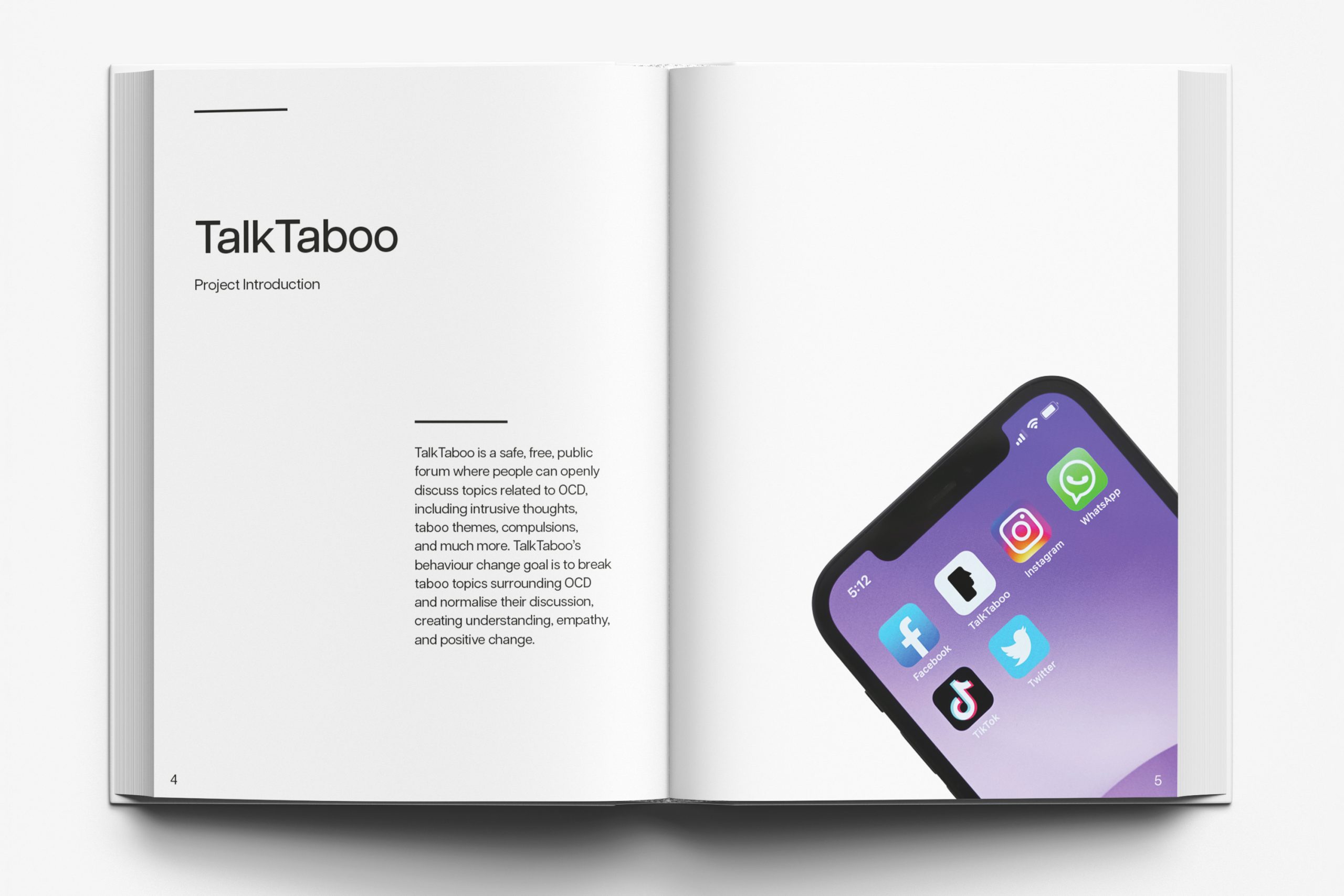
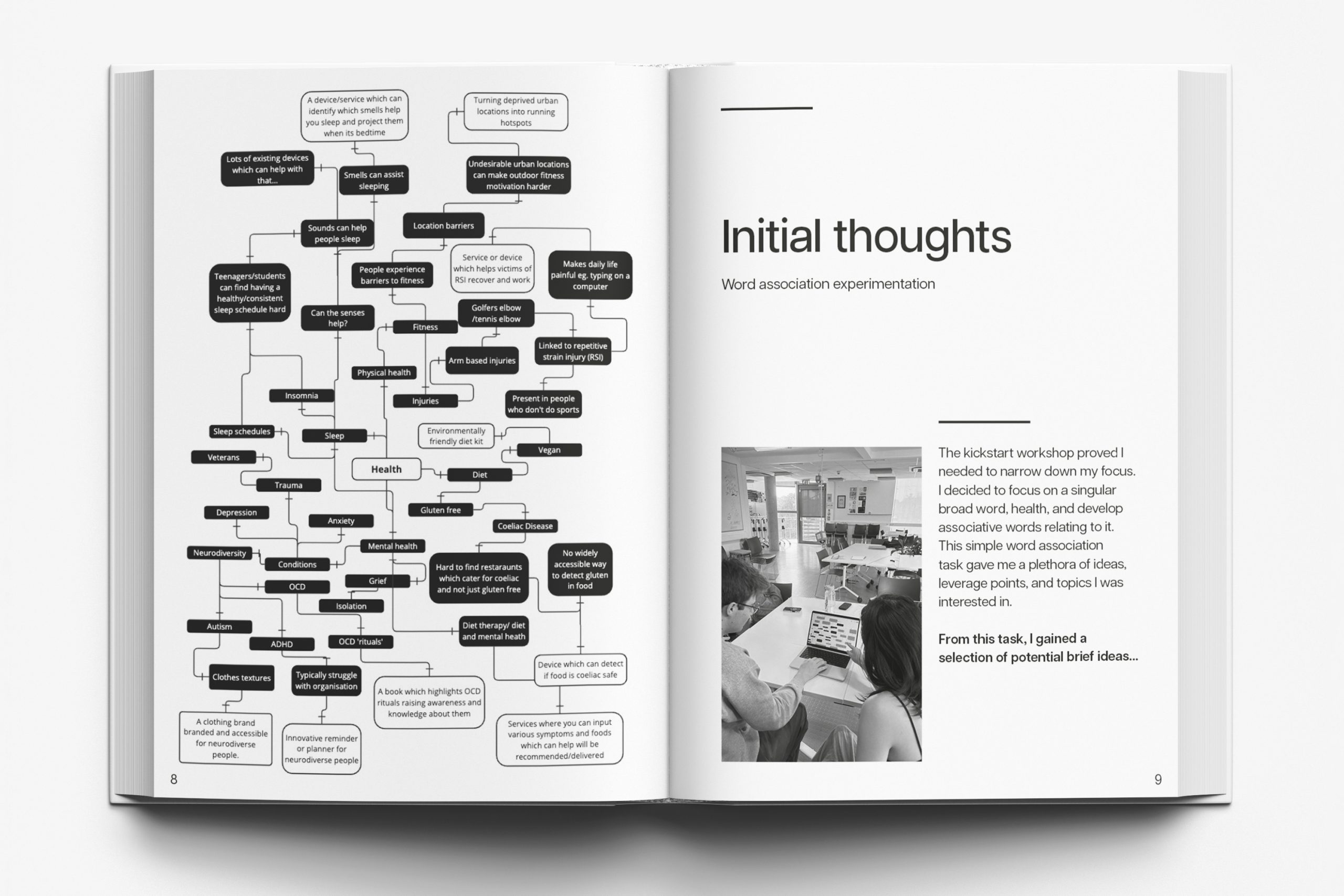
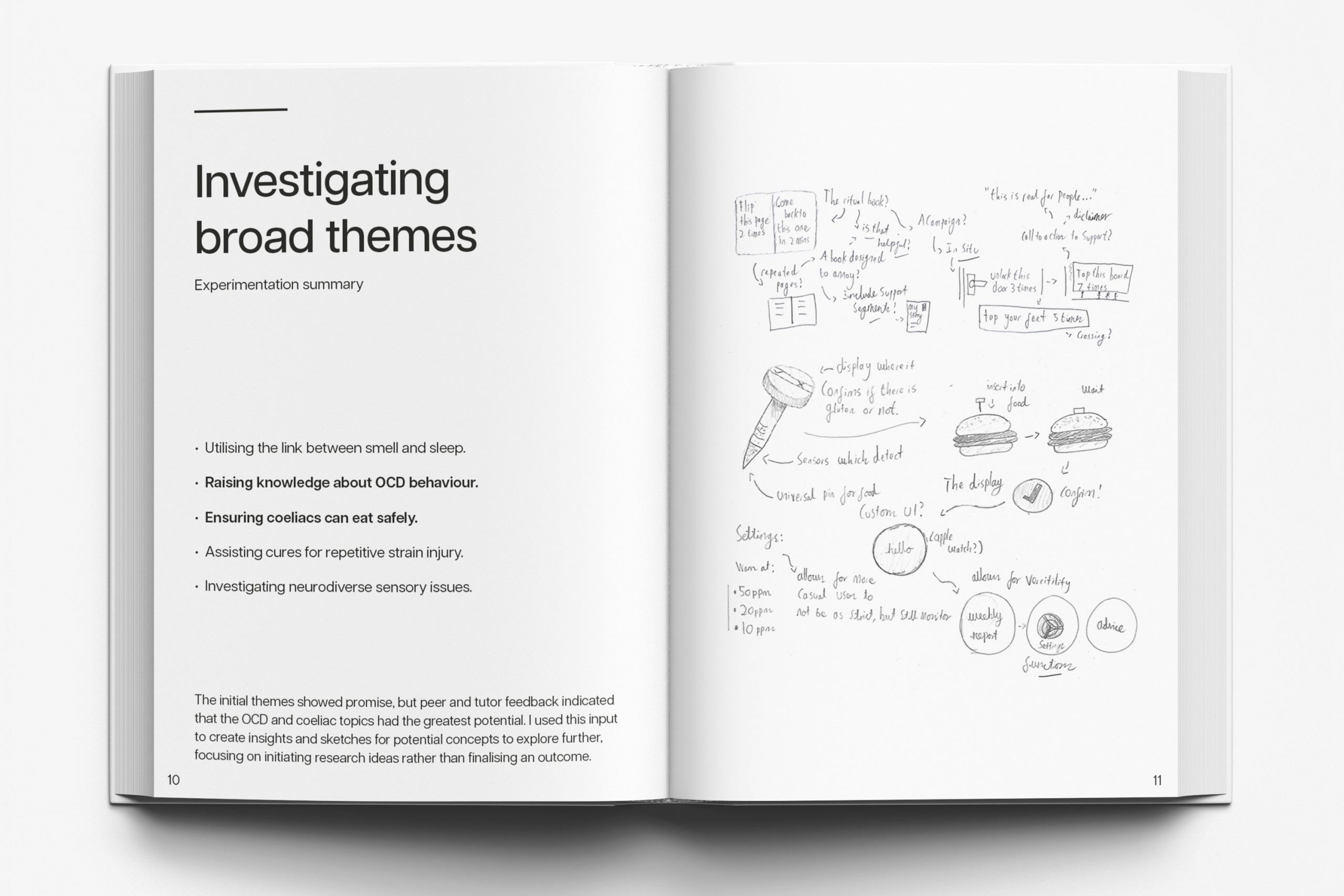
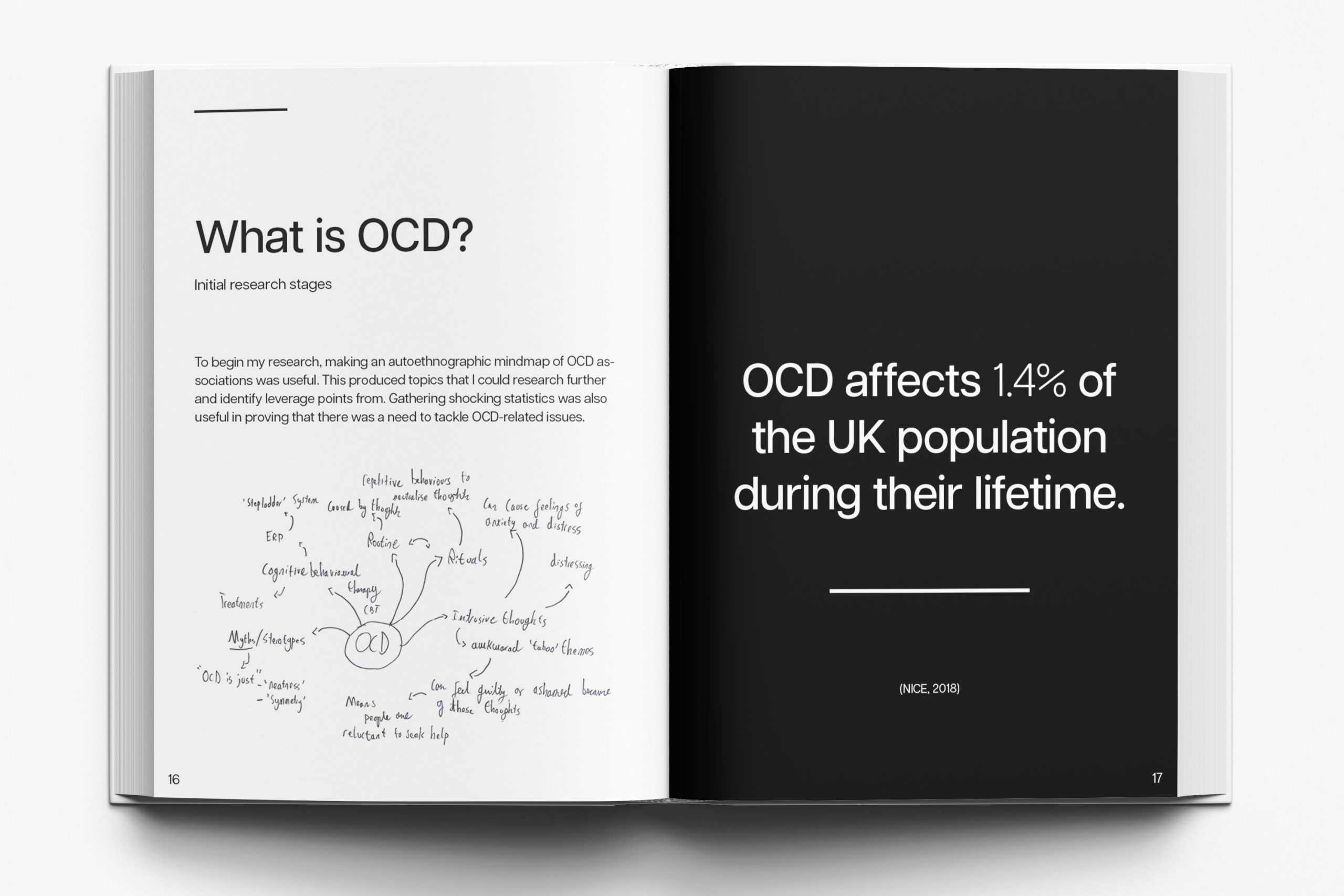
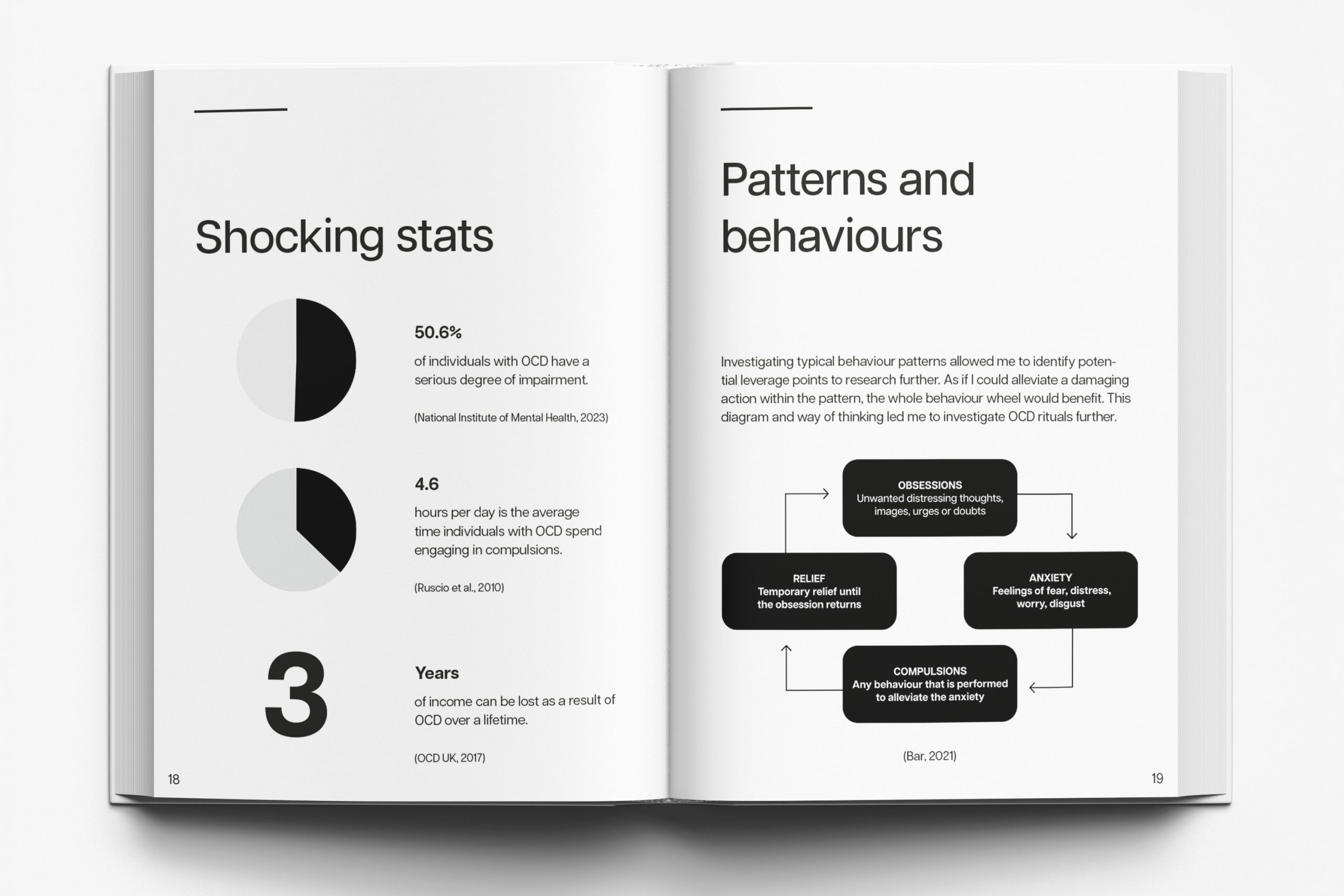
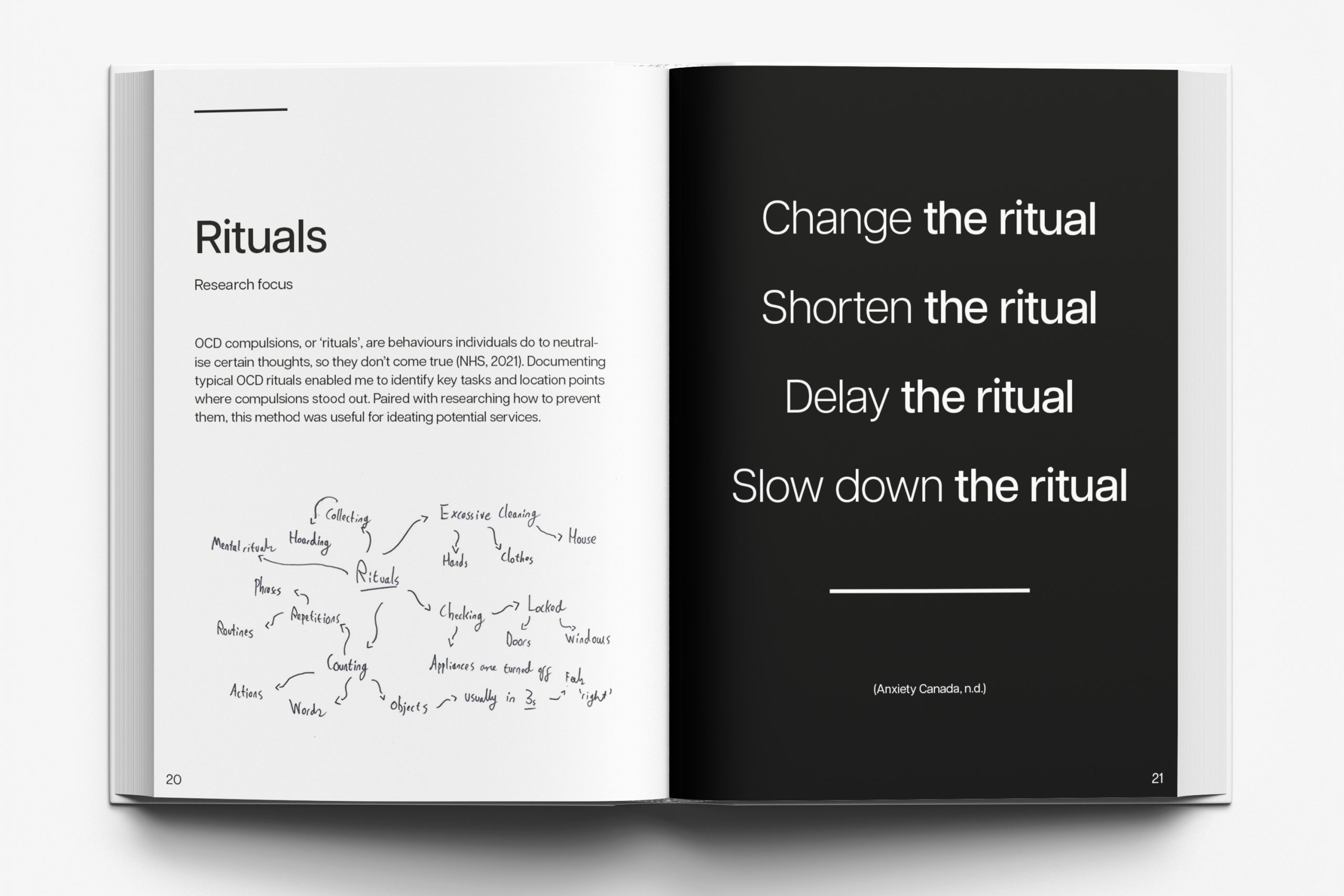
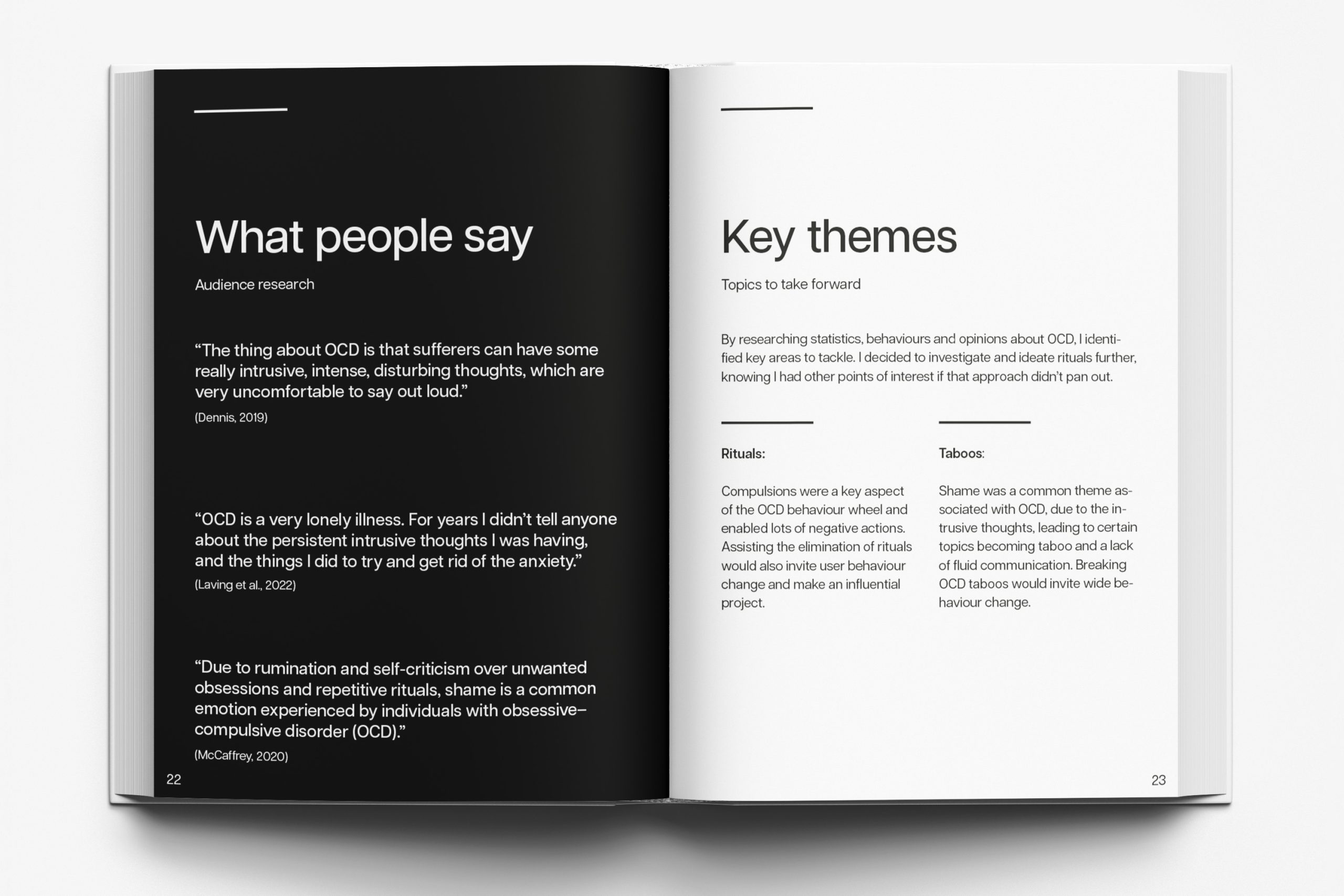
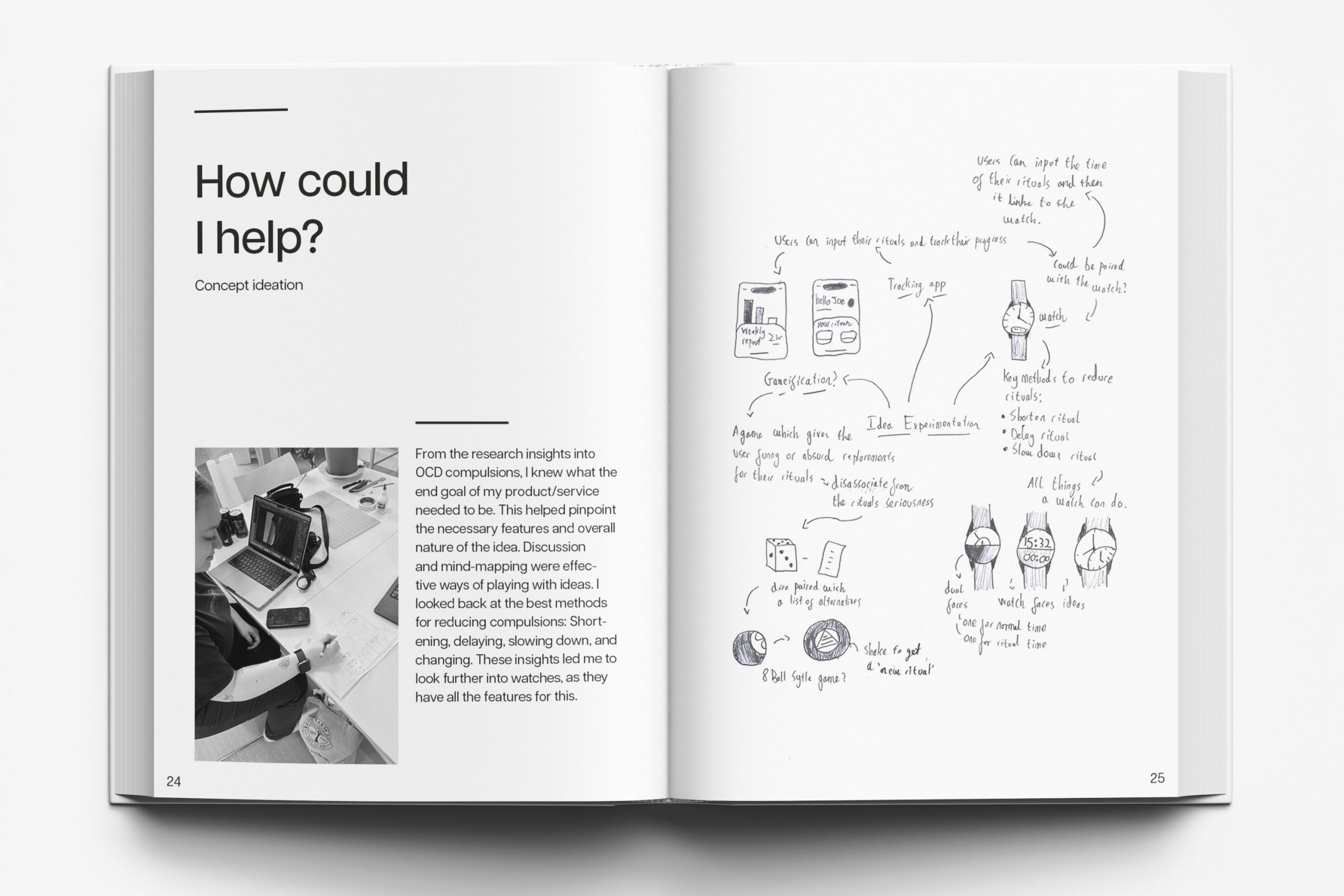
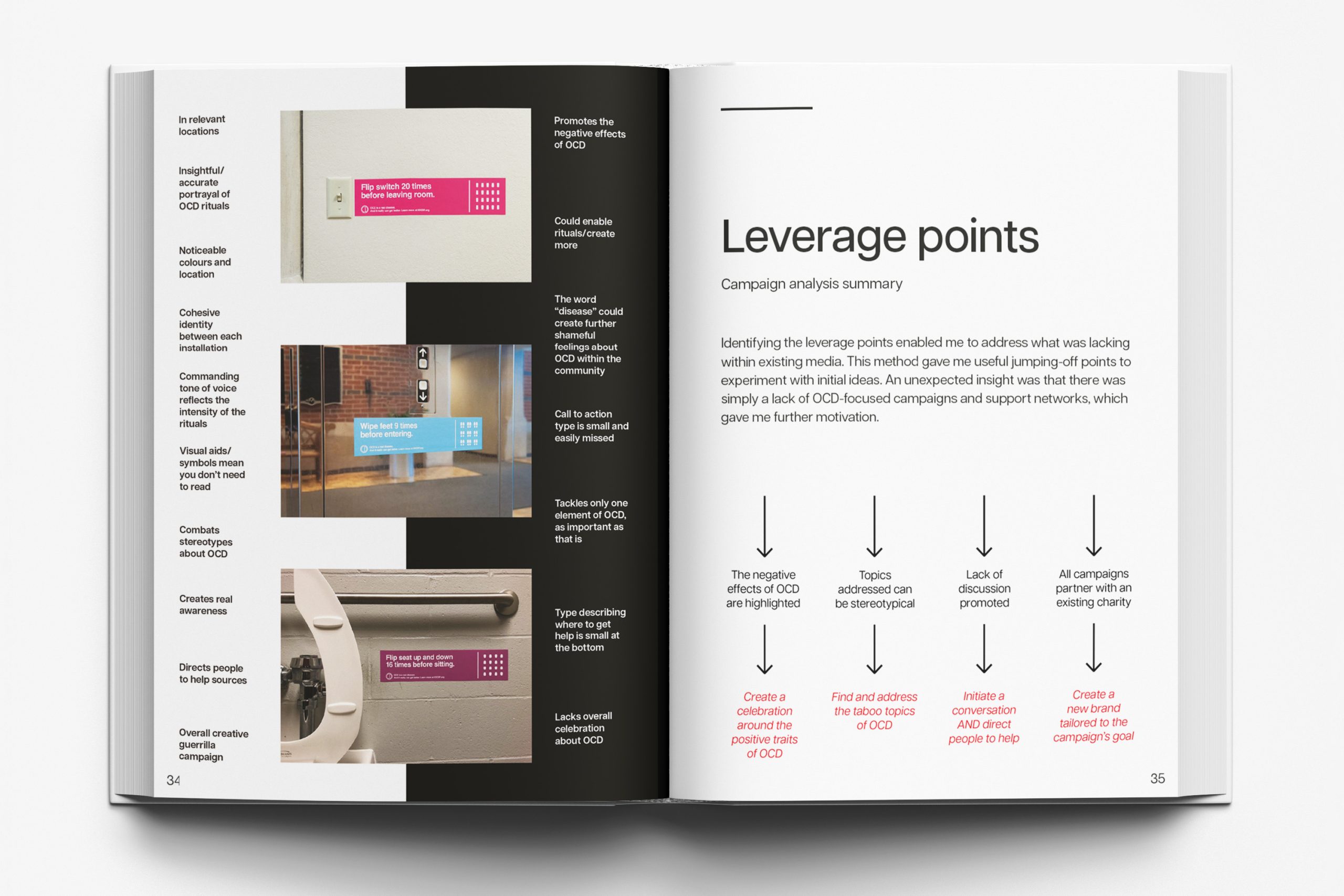
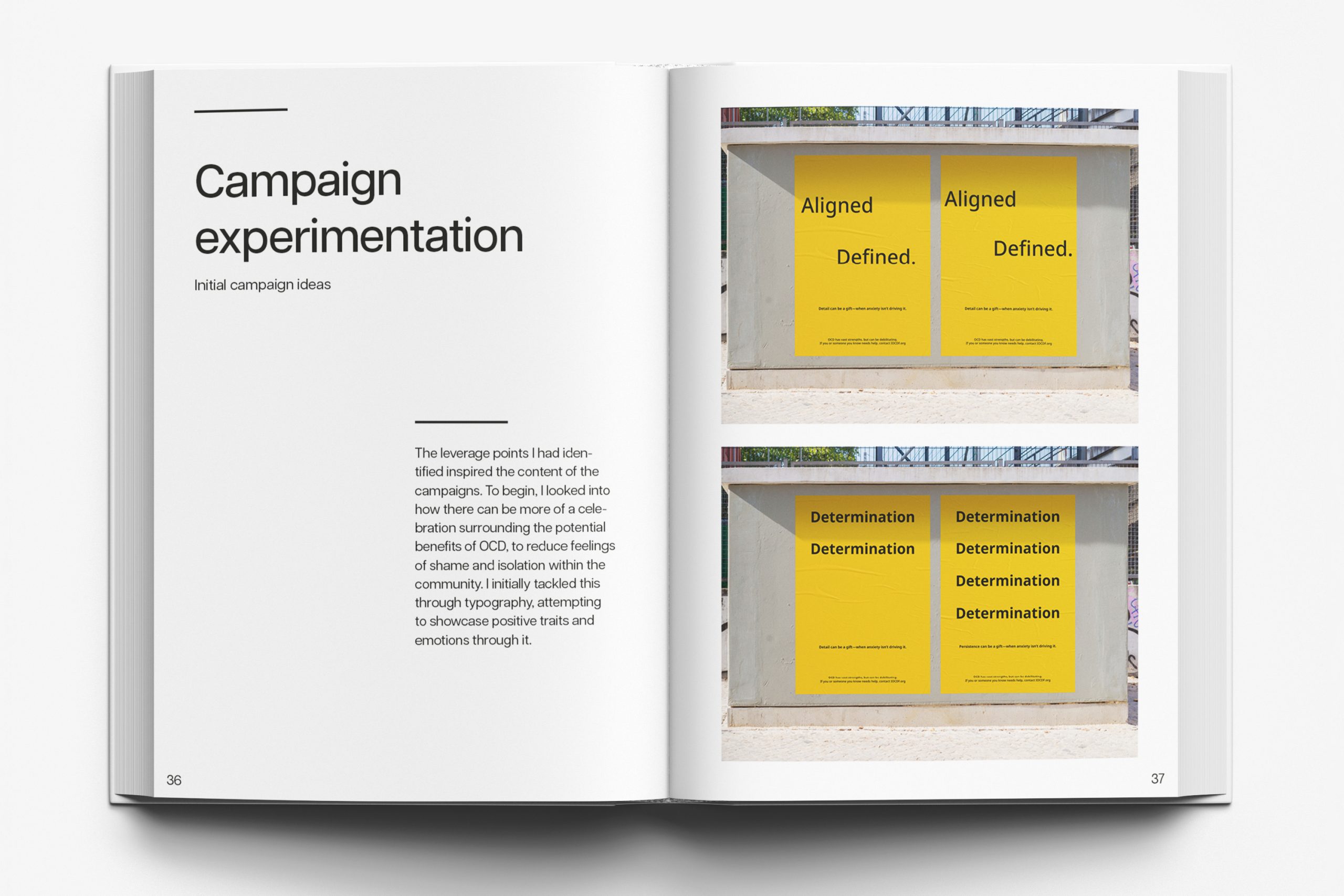
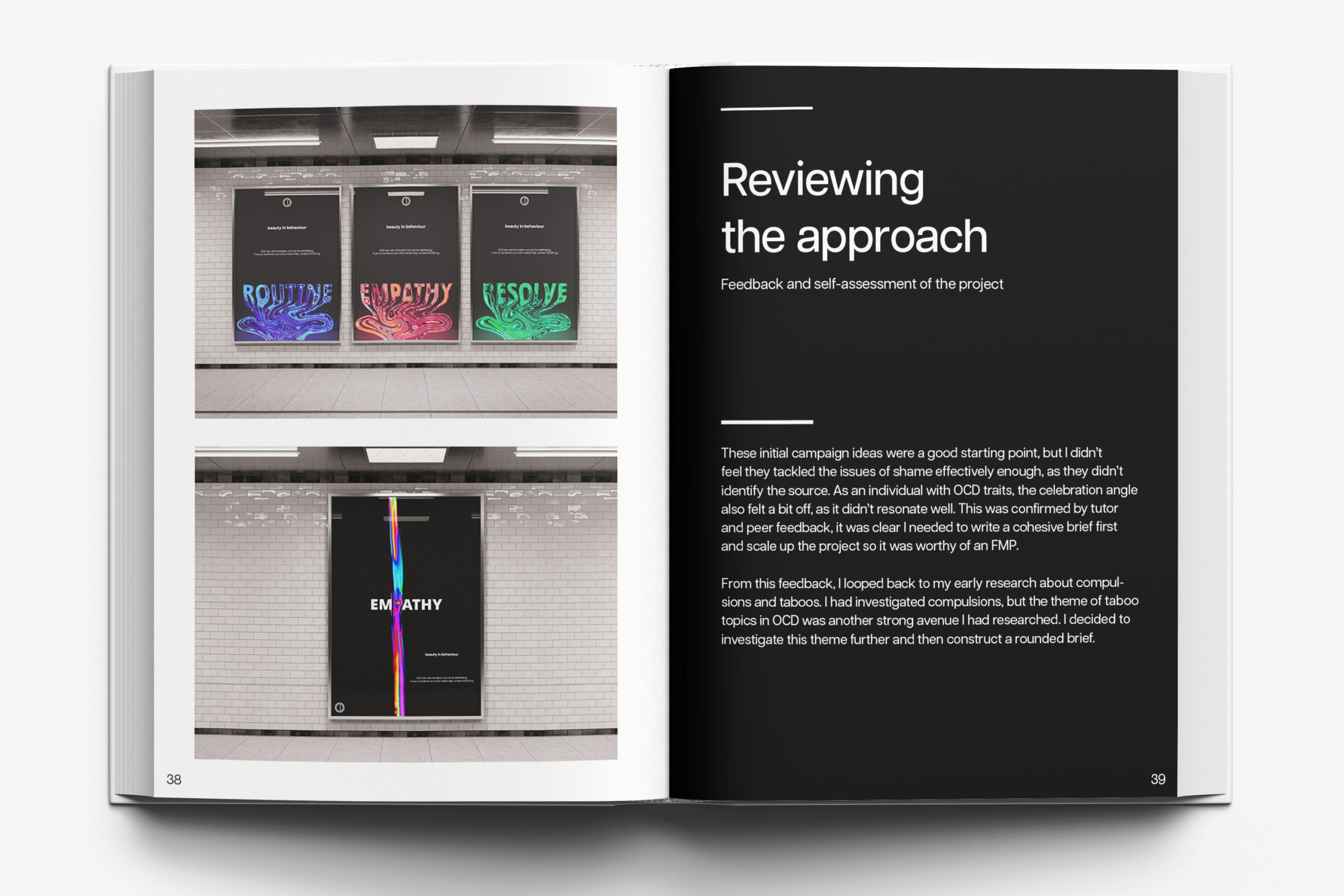
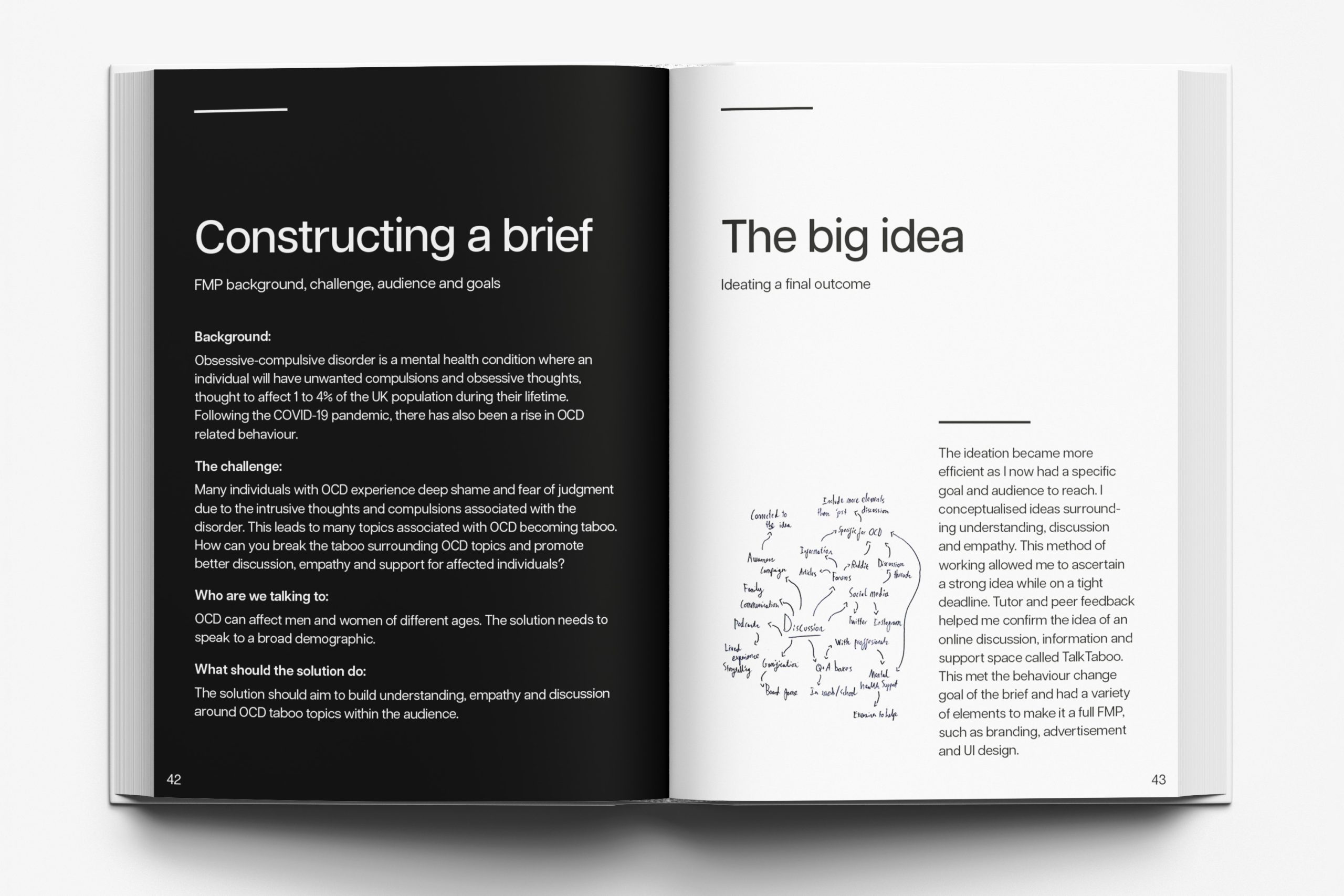
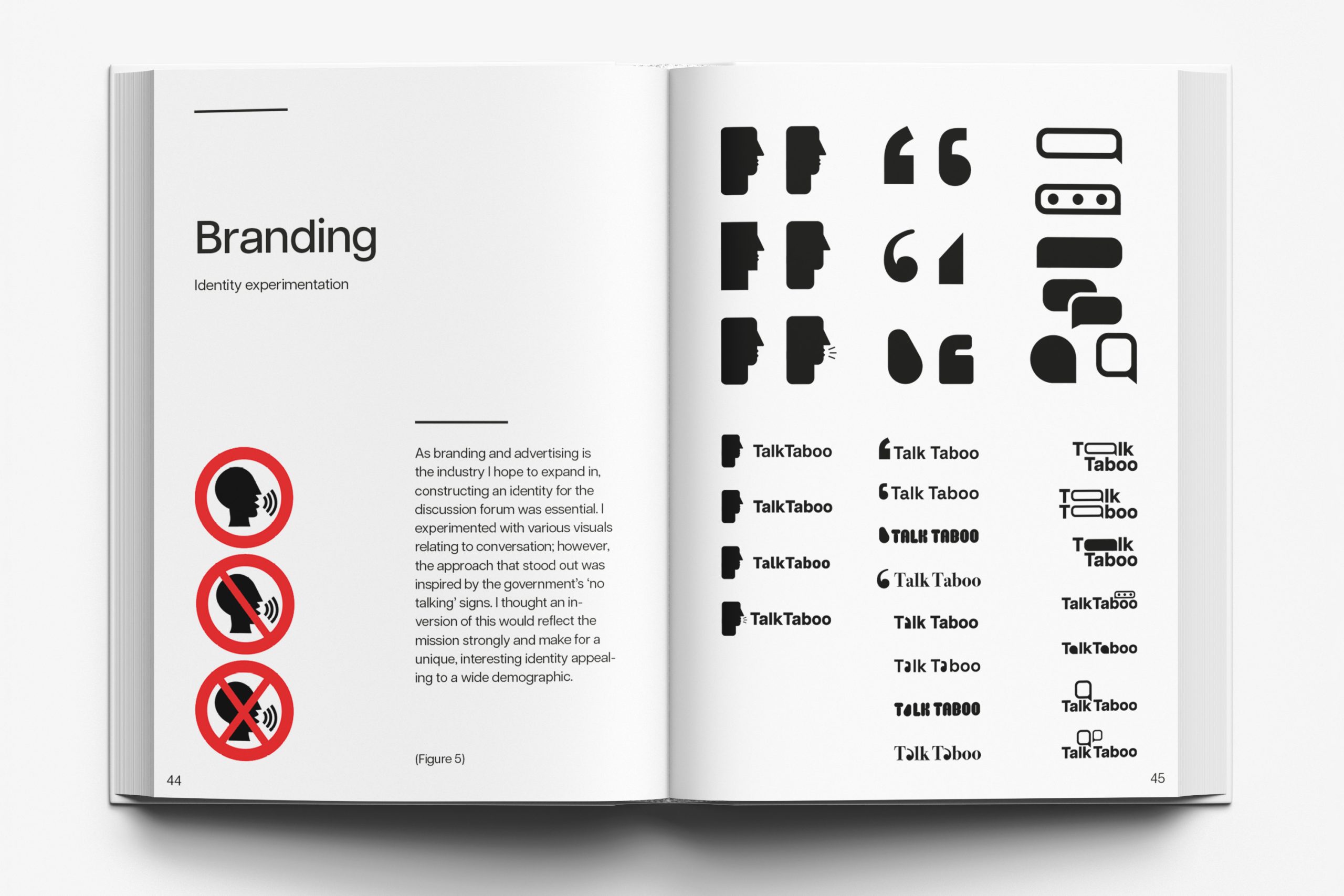
TalkTaboo was a project fueled by research insights, design iteration and autoethnographic passion. Initially focusing on important but specific aspects of OCD, such as rituals, TalkTaboo has grown in scope and efficacy throughout its process. Research and analysis of OCD behaviour patterns, audience research and my own experience prompted me to identify insightful leverage points which inspired the final result. A key finding from my research highlighted that shame was a common feeling experienced by many individuals with OCD and the importance of combating this emotion to facilitate crucial discussion.
This project allowed me to produce a result addressing design aspects I was keen to showcase in my portfolio, such as branding and campaigns. While also granting me time and practice in essential design aspects I hope to pursue within the industry, and skills I was keen to improve in. Constructing my own brief from scratch was a desirable but daunting task, which took time to fully launch, but was a rewarding process. TalkTaboo combats issues I have experienced with my personal OCD related behaviour, and a constant source of inspiration was the knowledge that the result is something I, as well as many others, would support and use if it existed as intended.
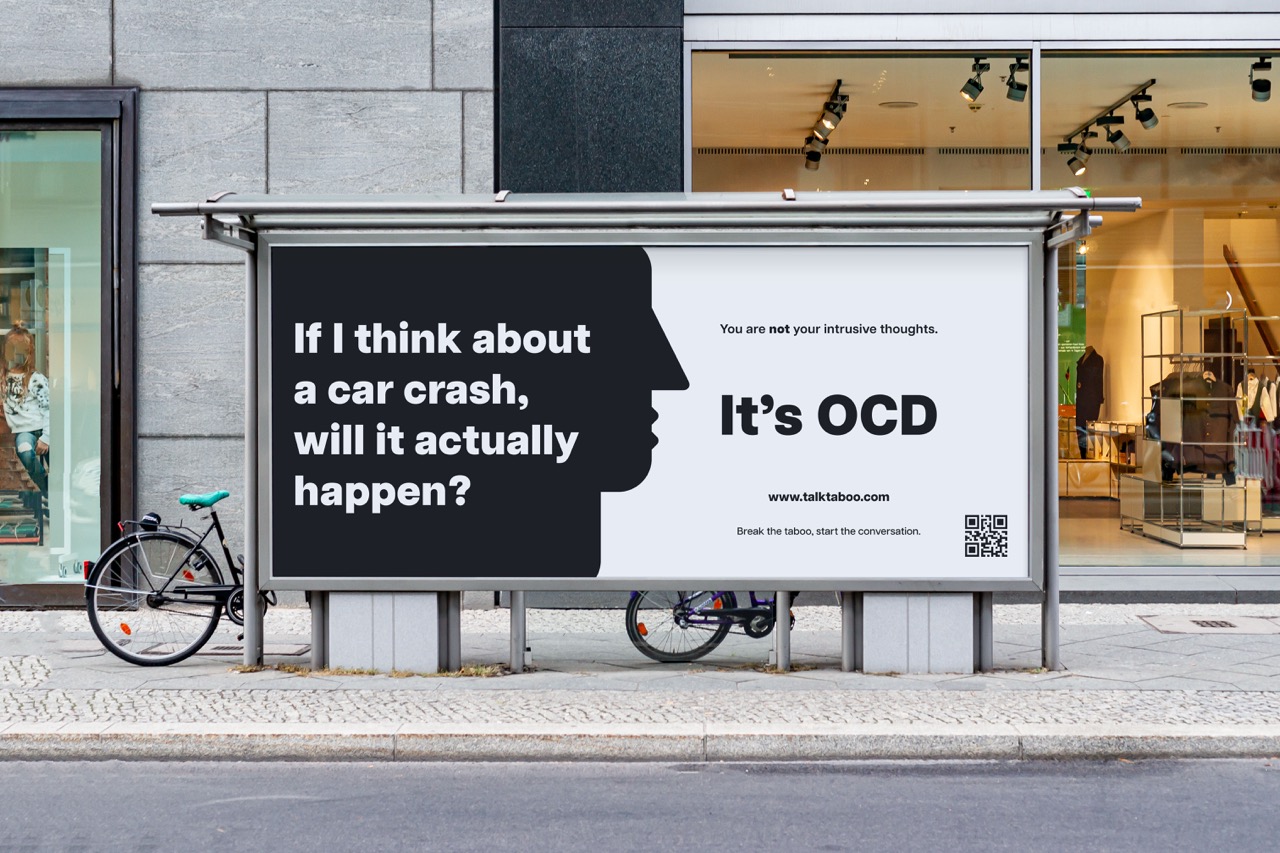
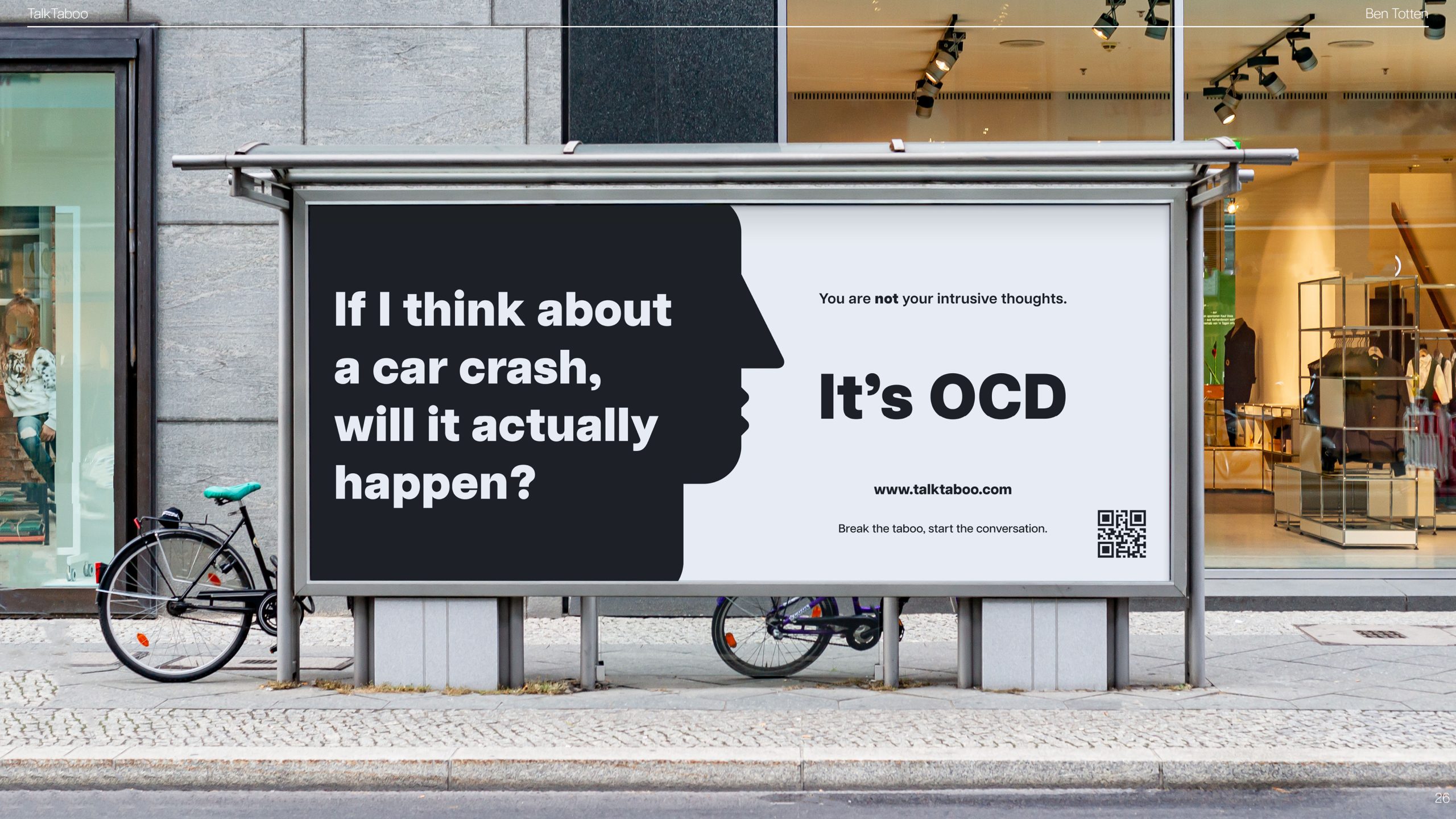
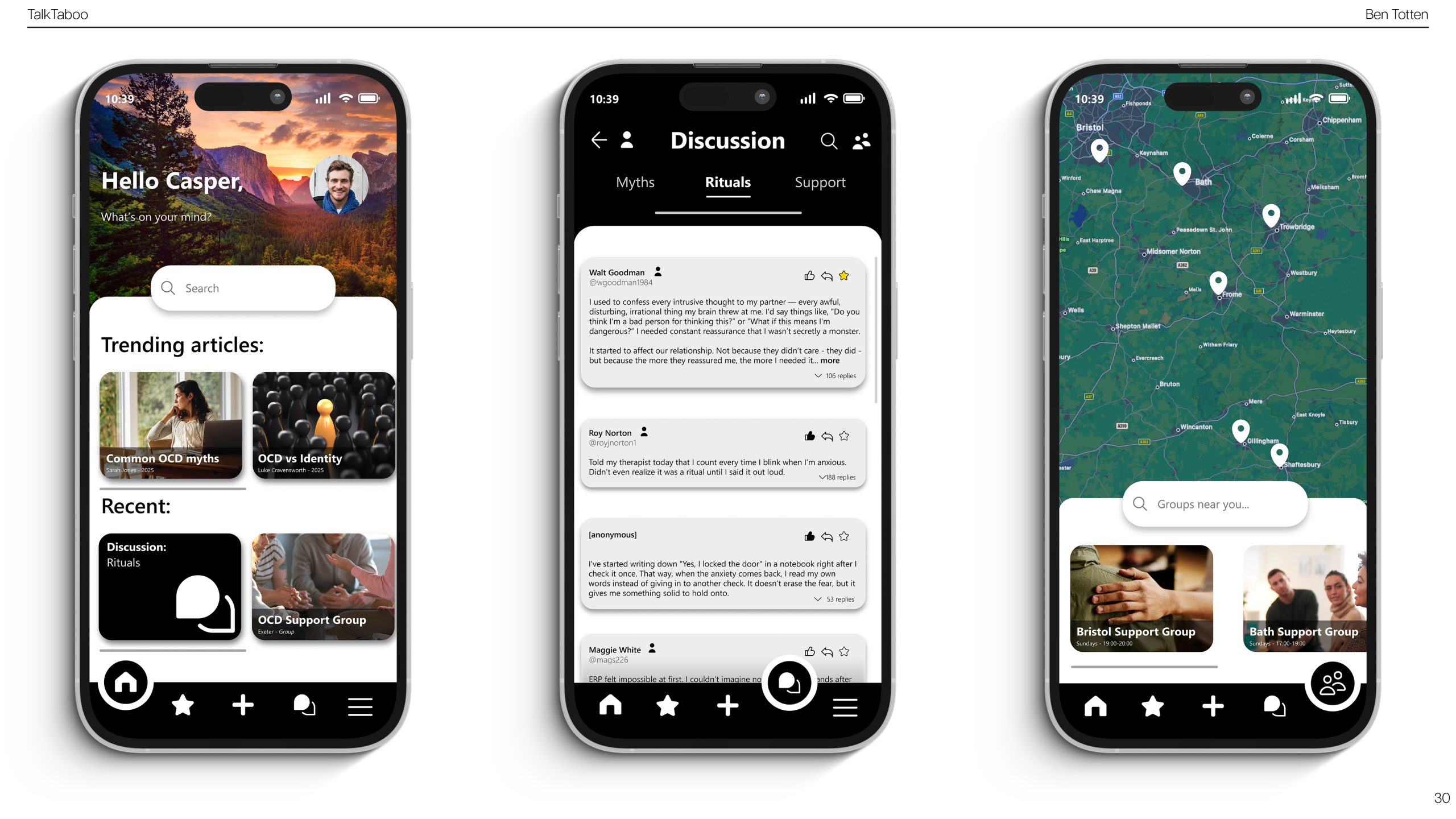
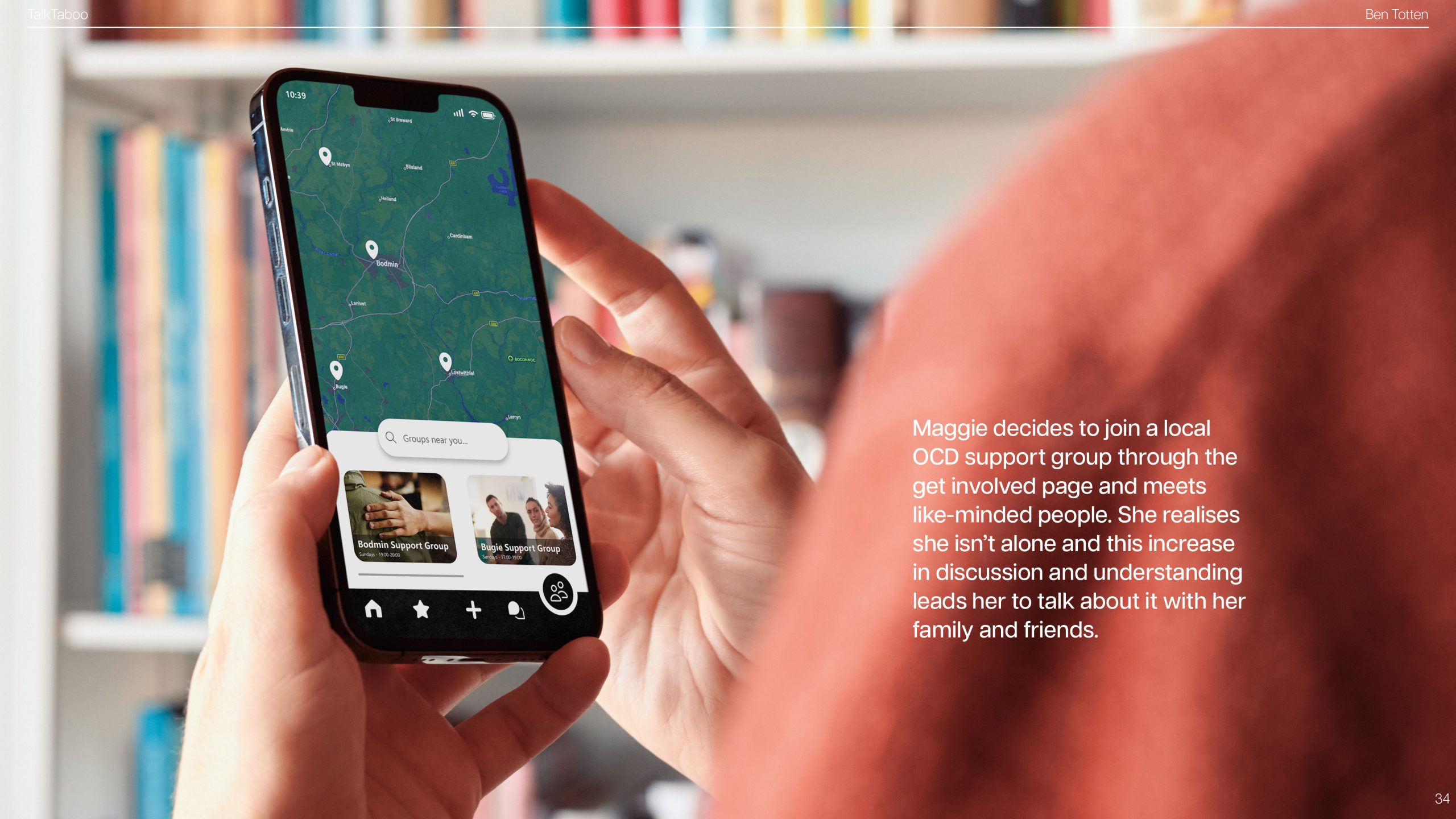
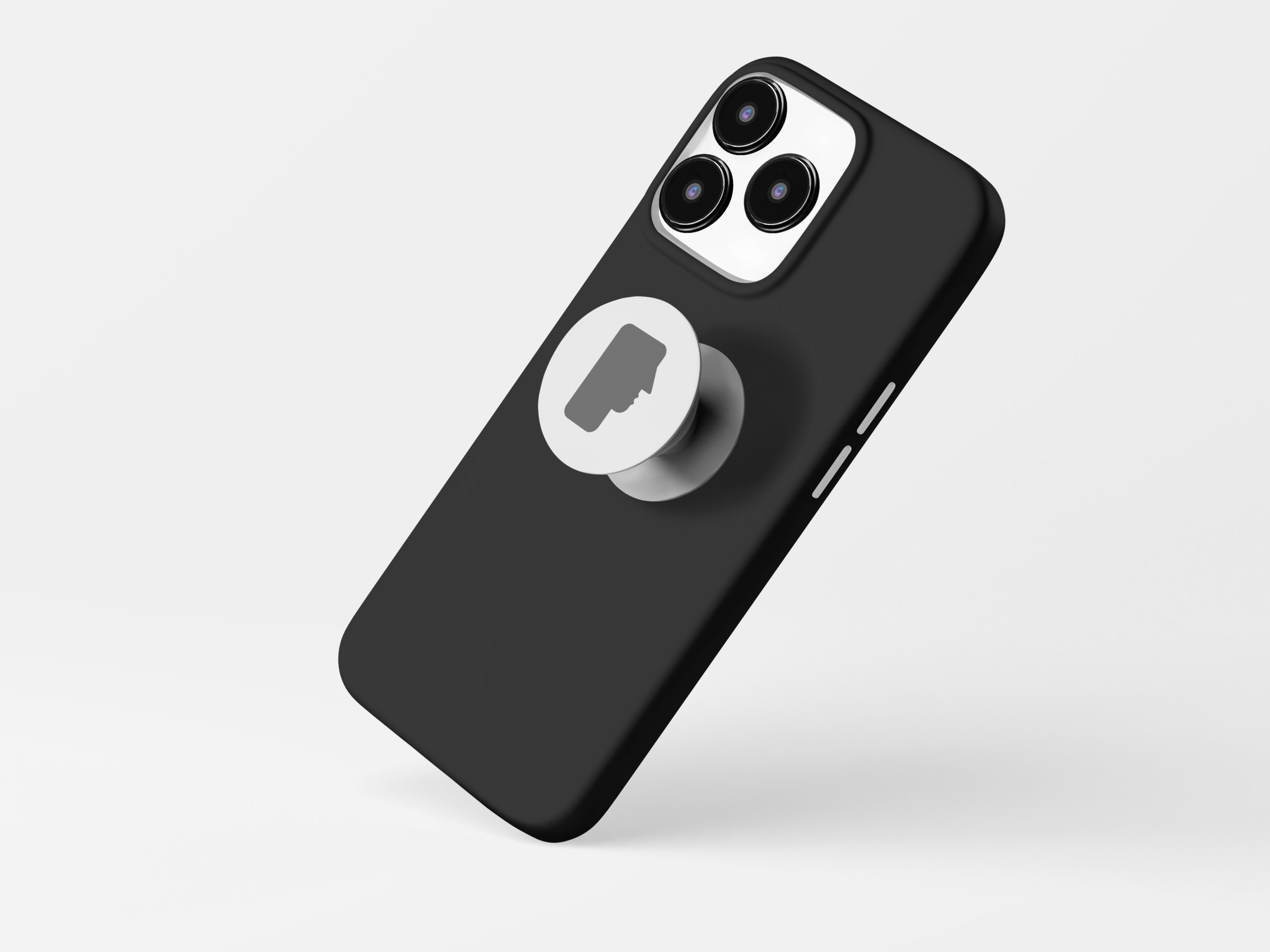
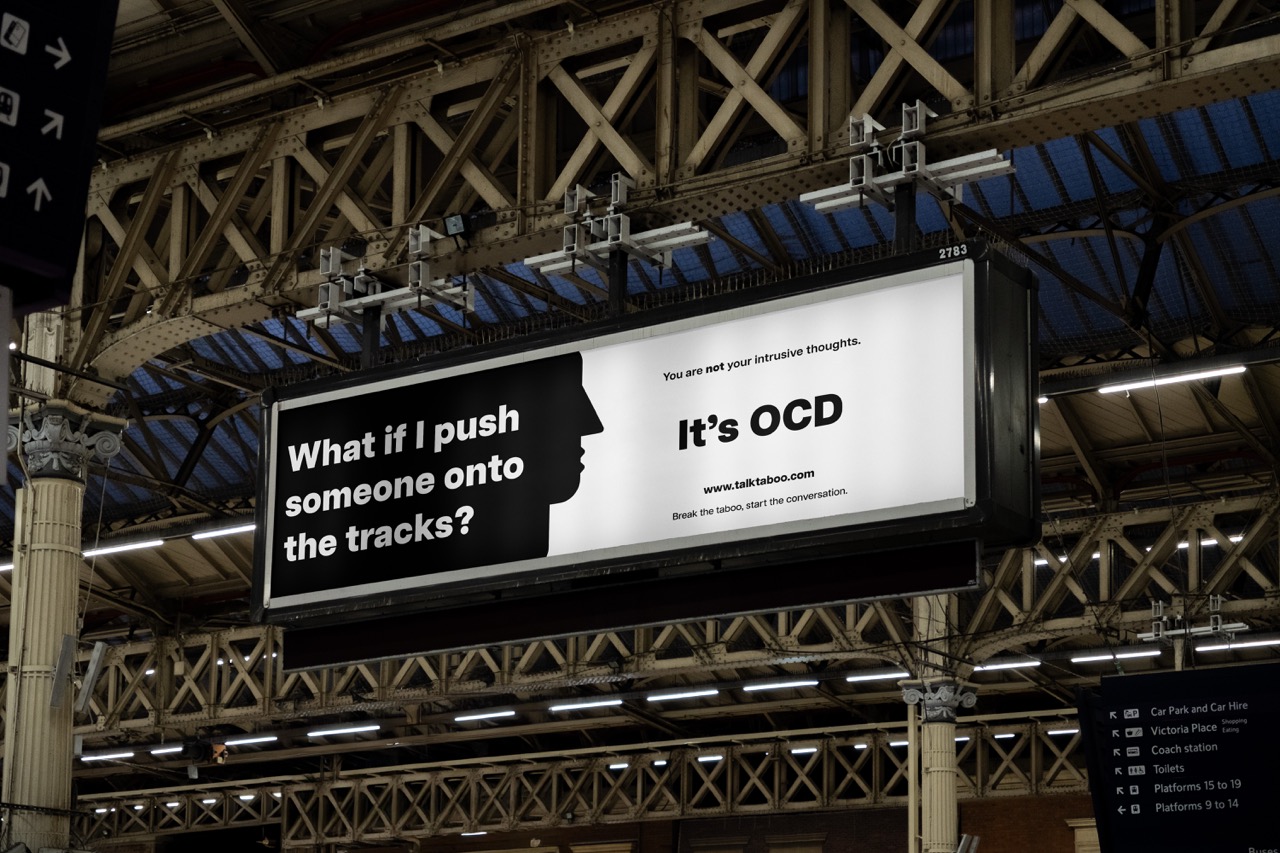
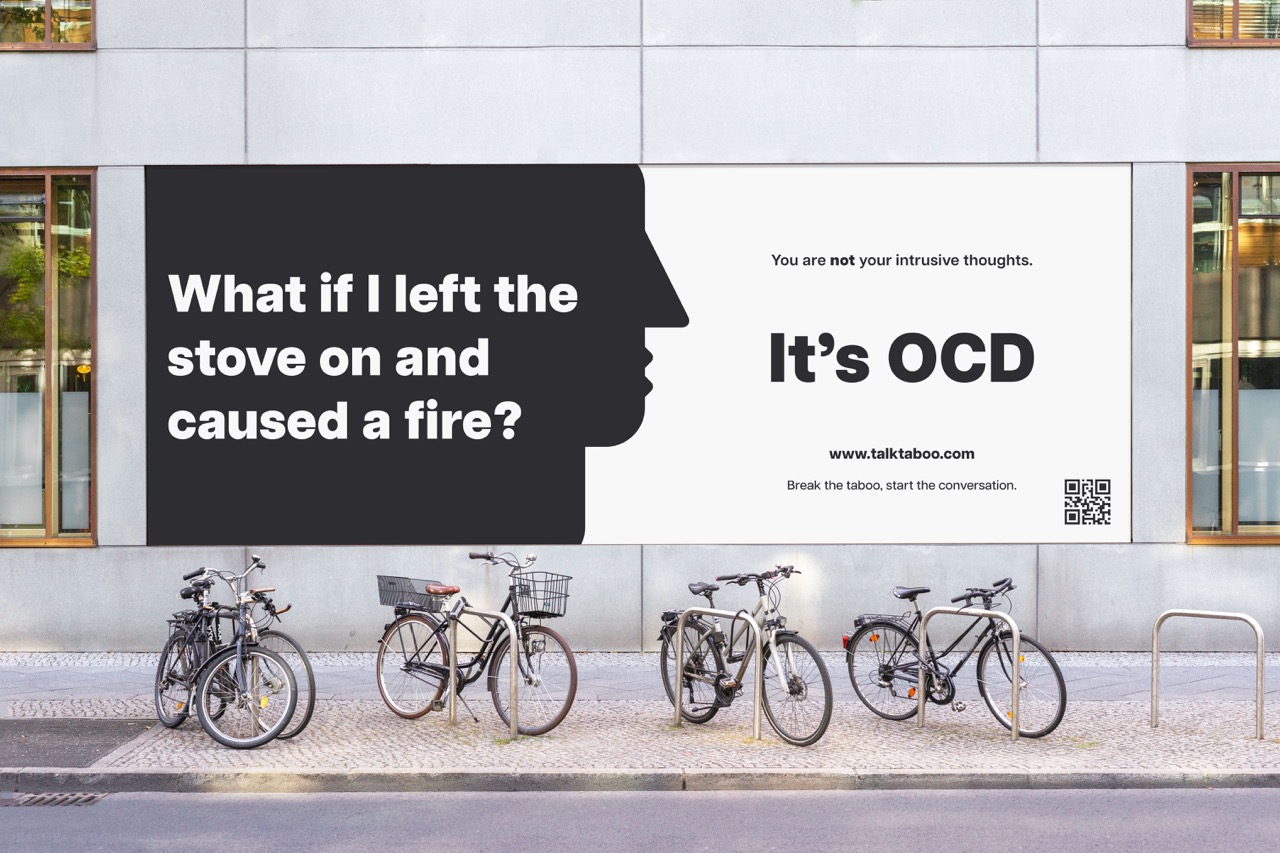
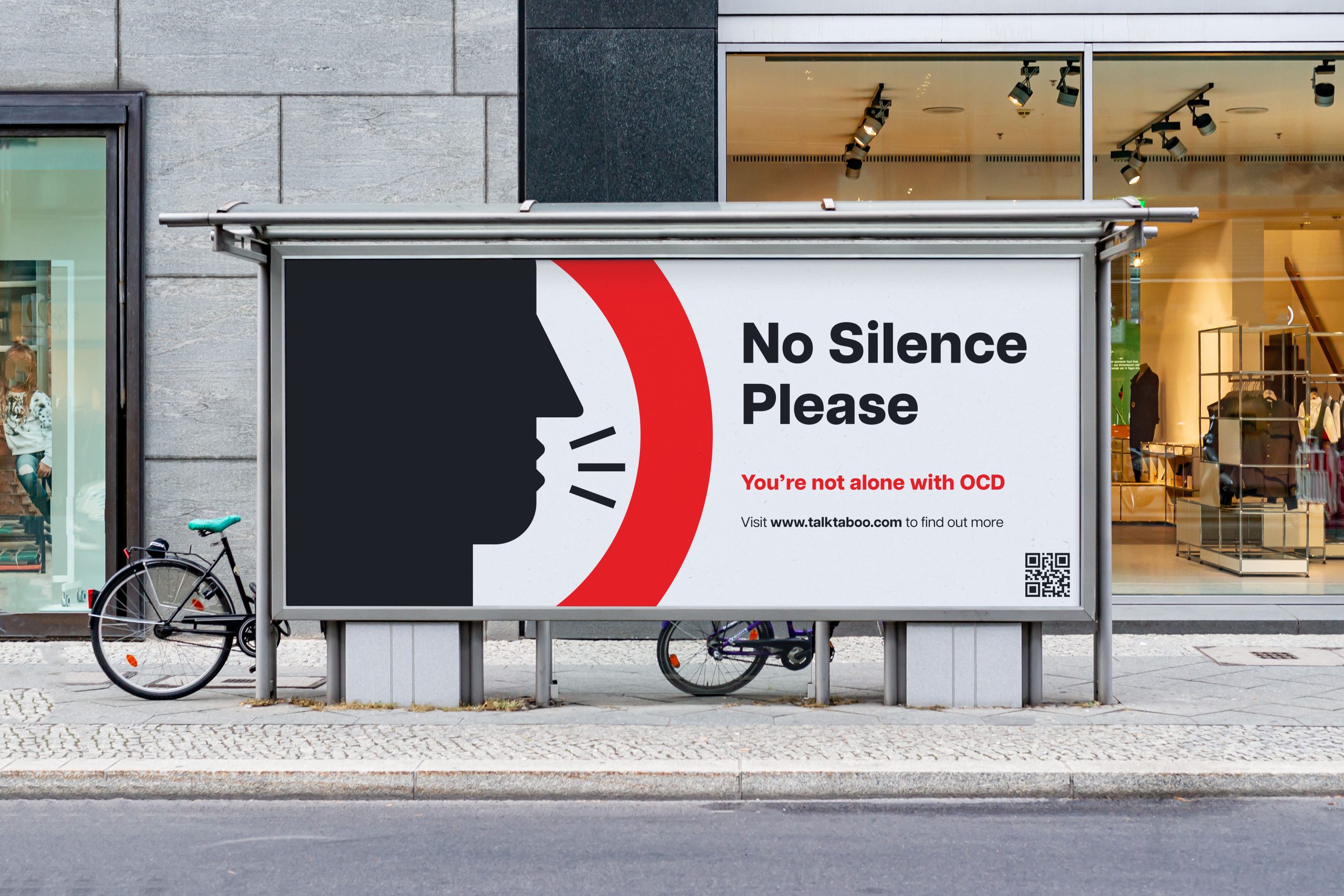
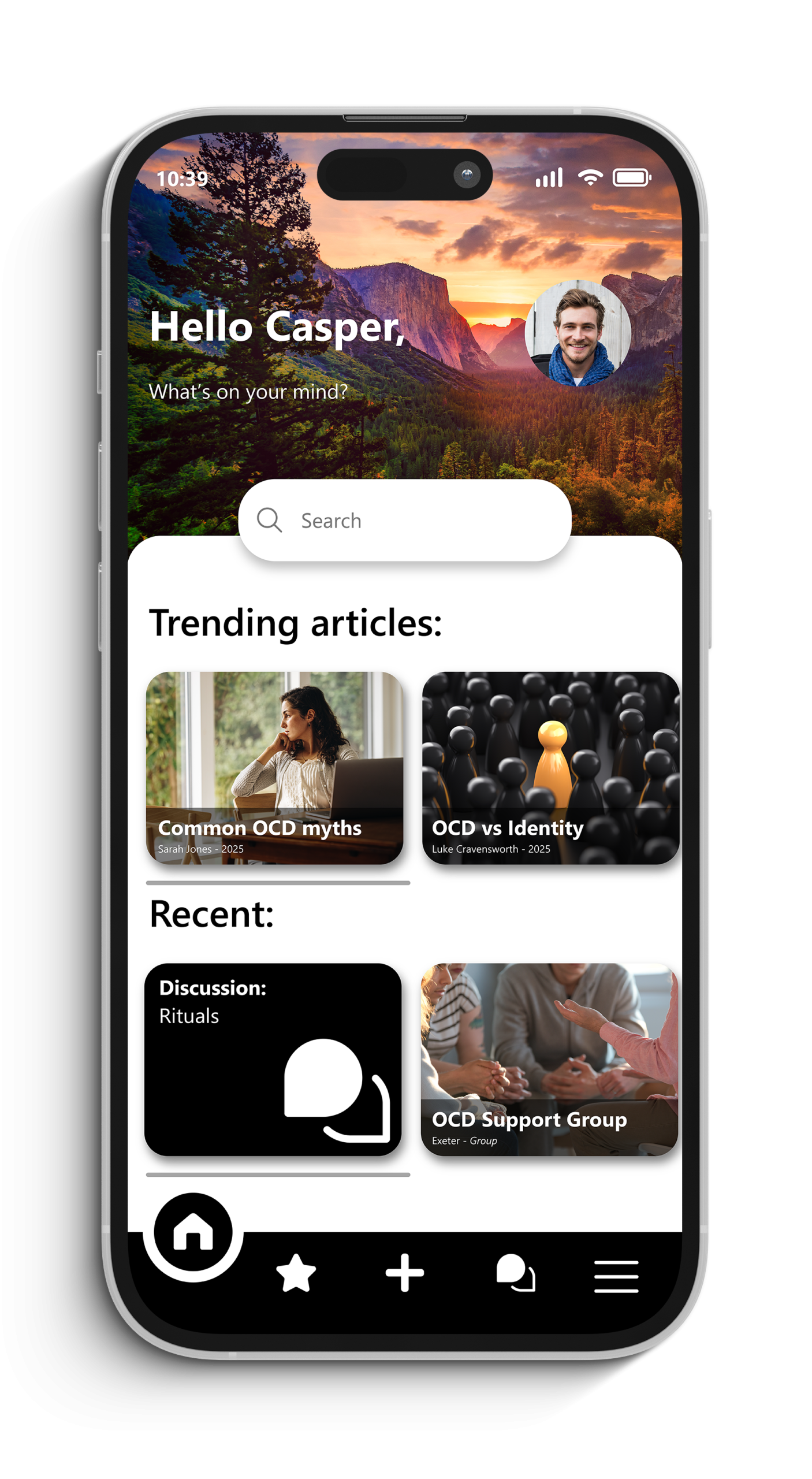
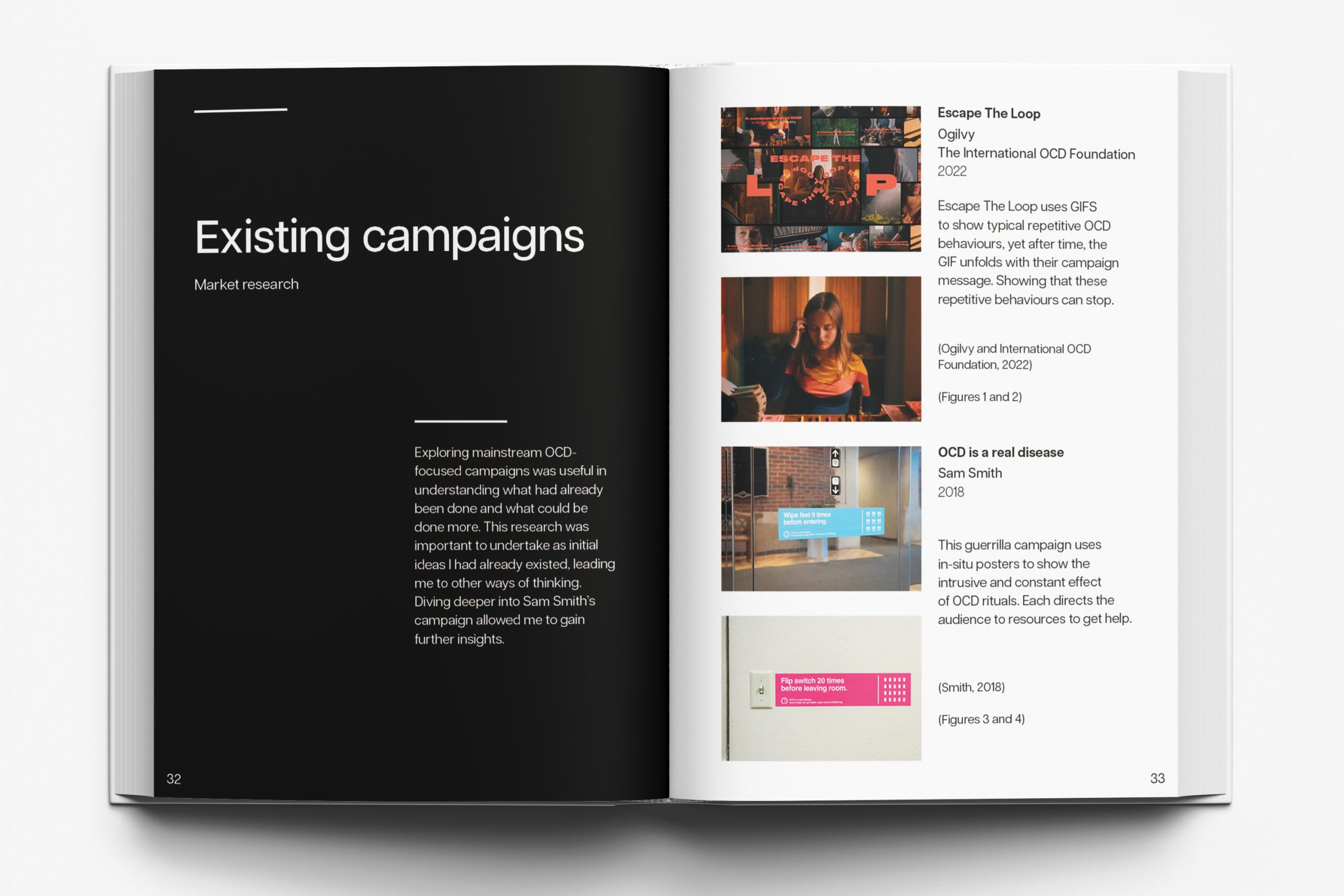
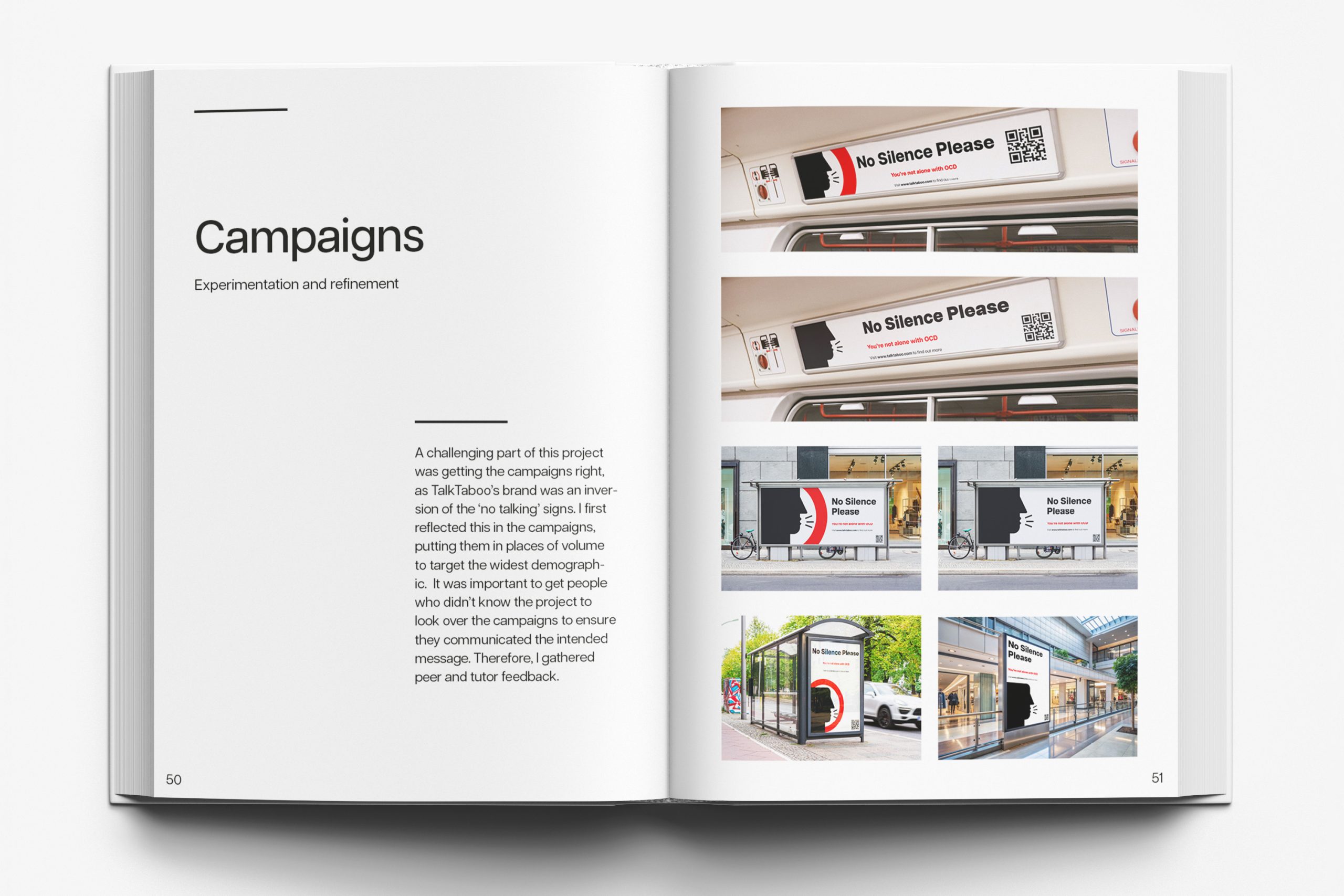
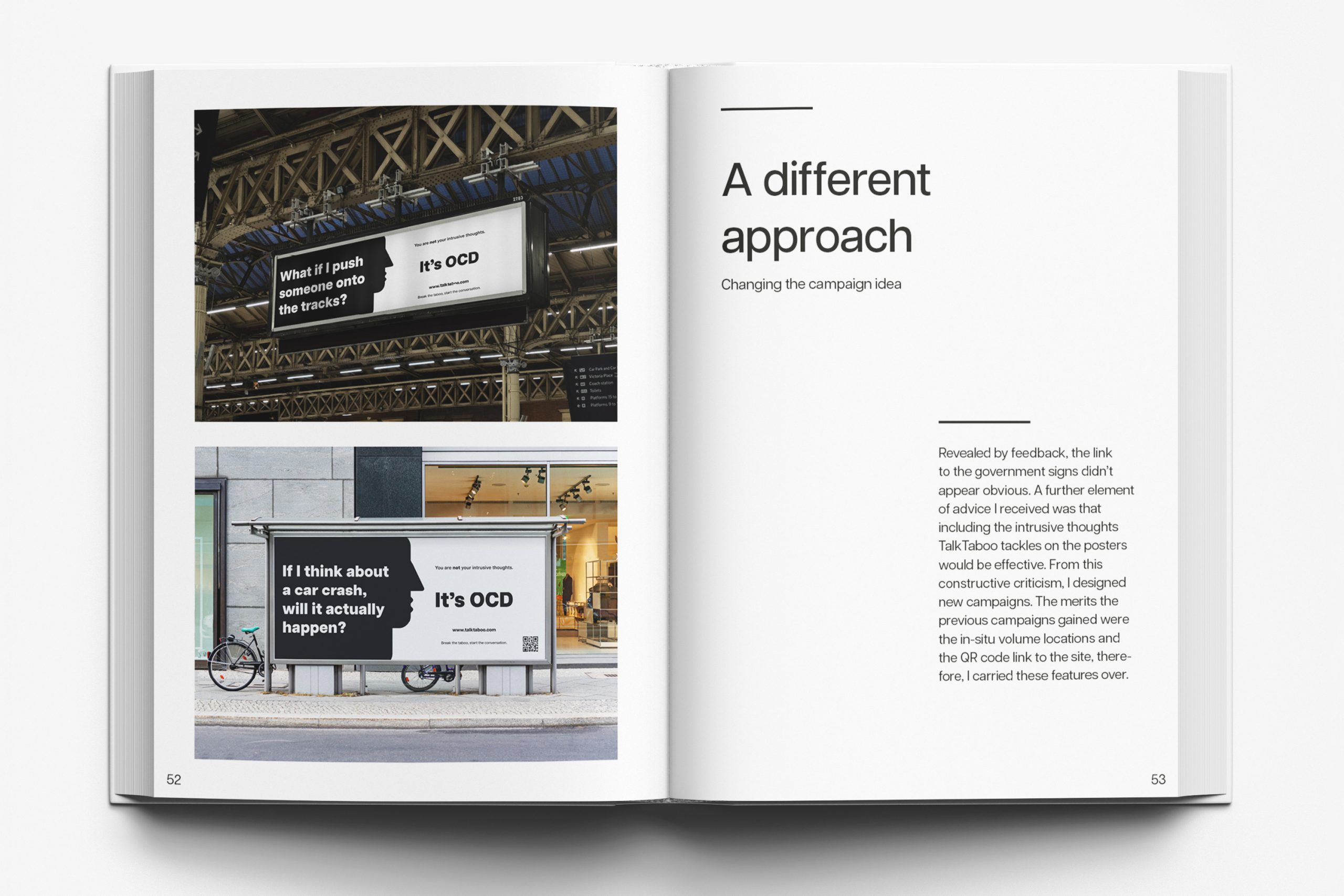
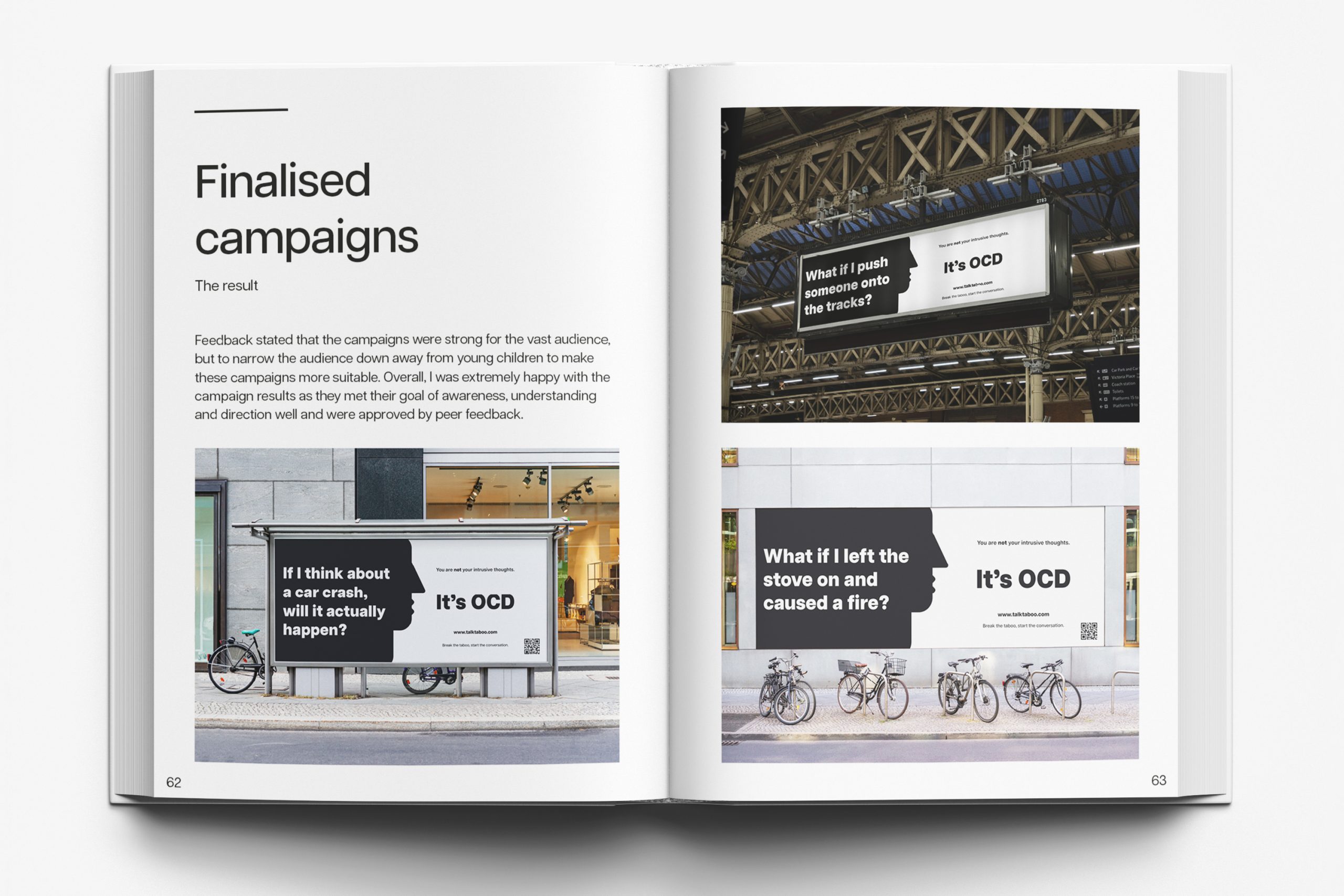
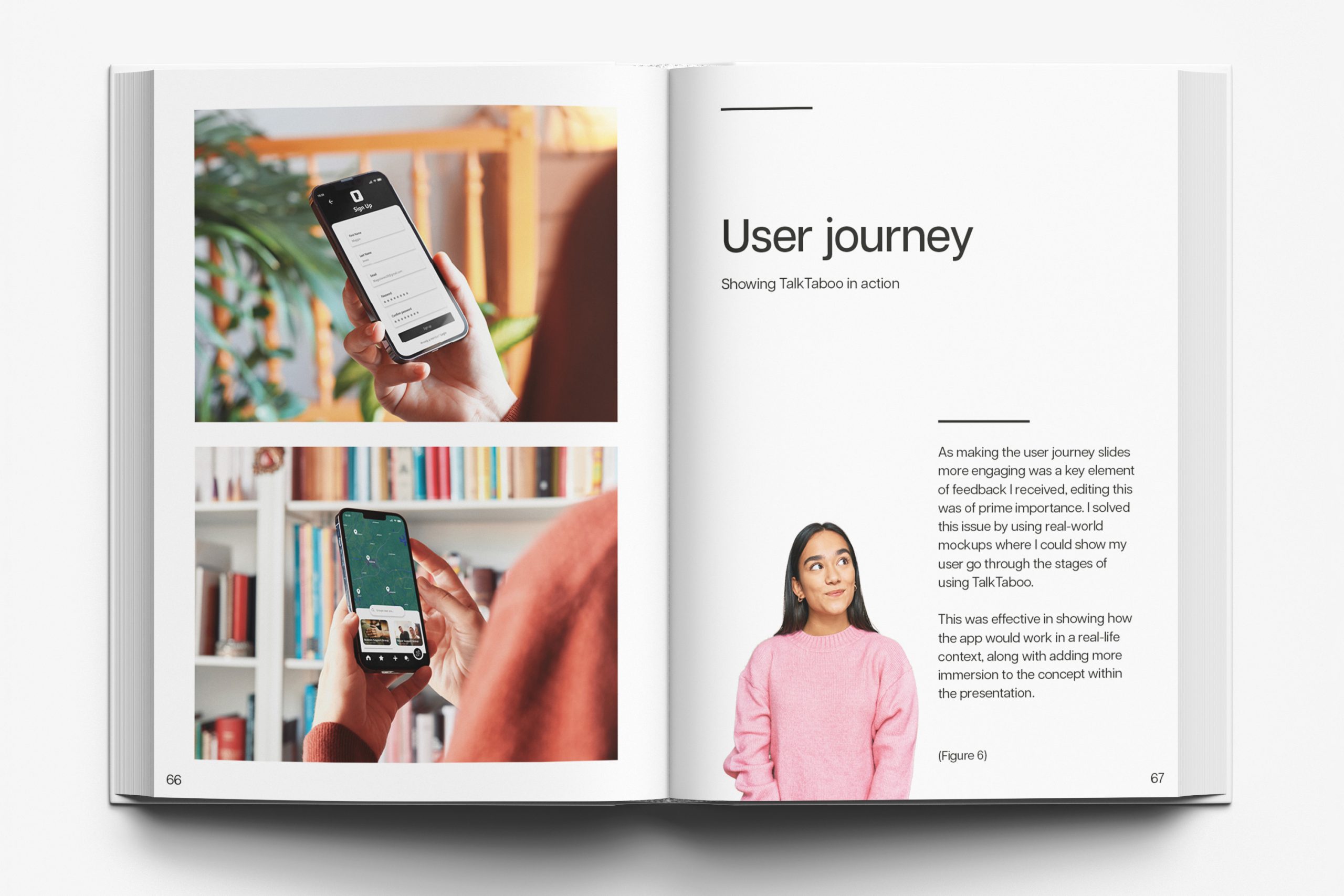
A strong aspect of the TalkTaboo project was its ability to be community-led and culturally responsive, while remaining a factual and safe online space. Partnering TalkTaboo with the NHS, and explaining how and why it would be mutually beneficial, gave the project further credibility as a discussion forum. A further strength lay in the campaigns, as successfully identifying key leverage points within existing awareness campaigns allowed for an original and striking result.
Nevertheless, TalkTaboo's main weakness as a project was a lack of user responses and input to the concept. While I had gathered audience research online, tutor and peer feedback and investigated my own insights, collecting primary research into TalkTaboo's features and design would have brought forward further insights. Therefore, pushing the project to be more relevant to its intended audience.
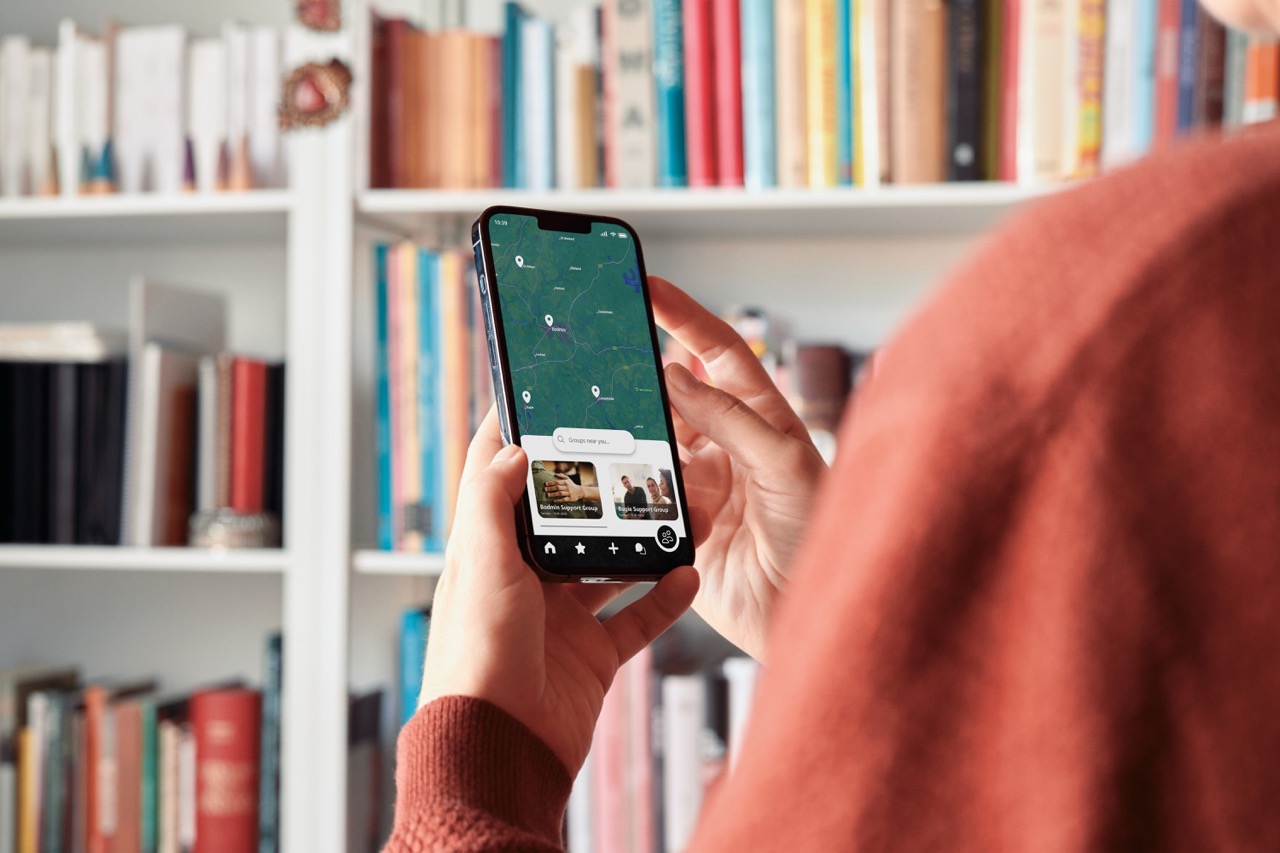
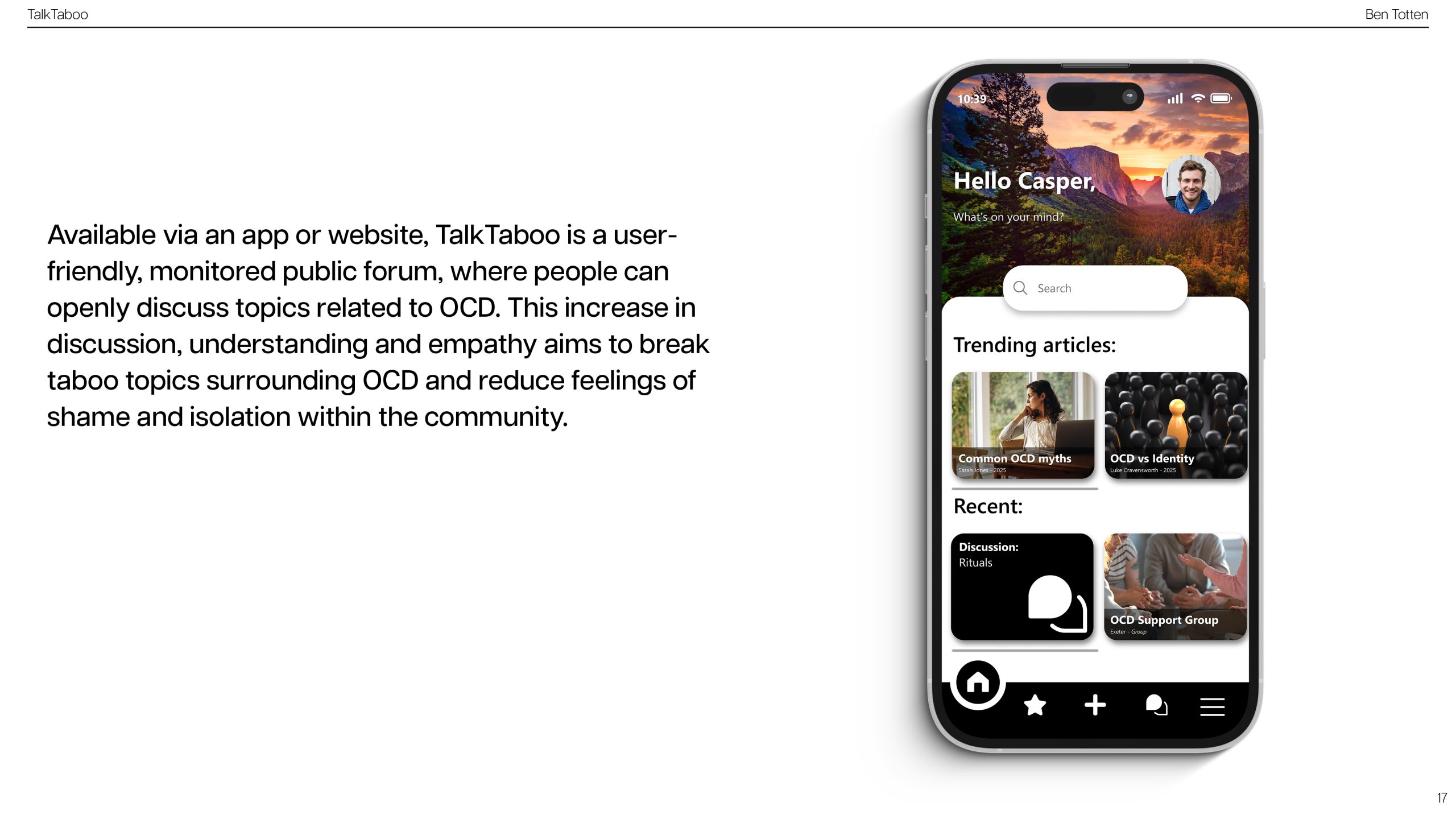
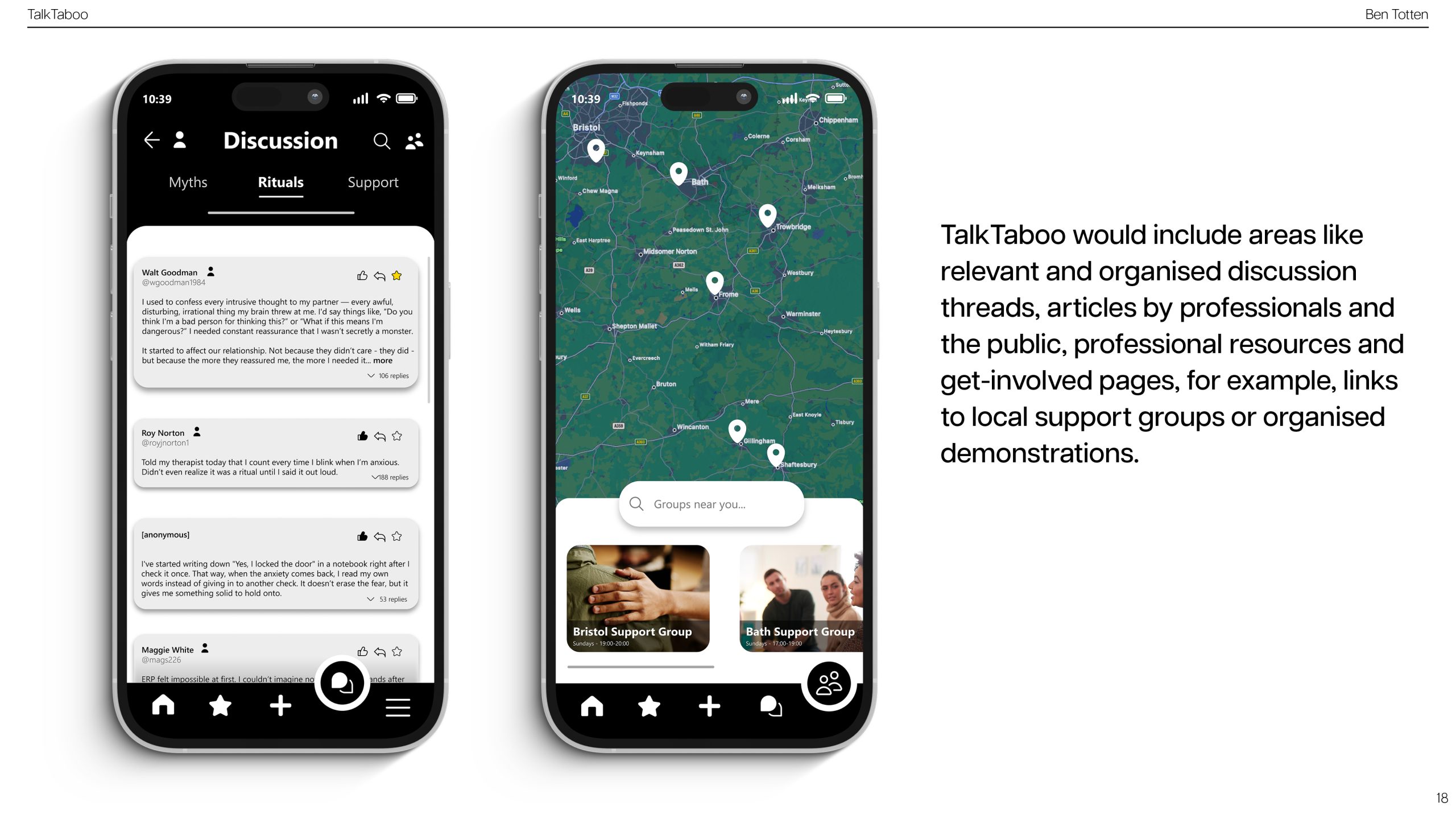
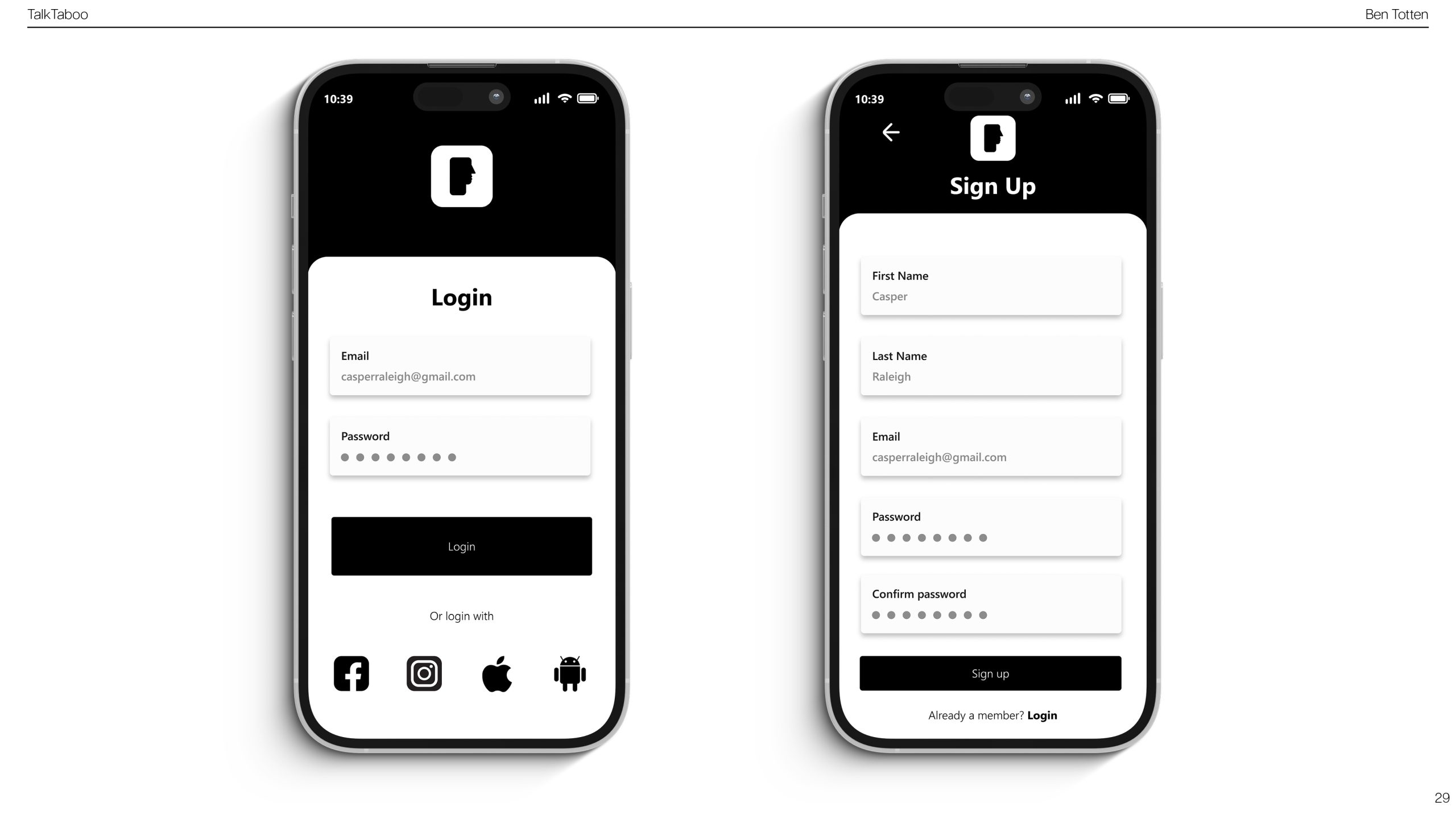
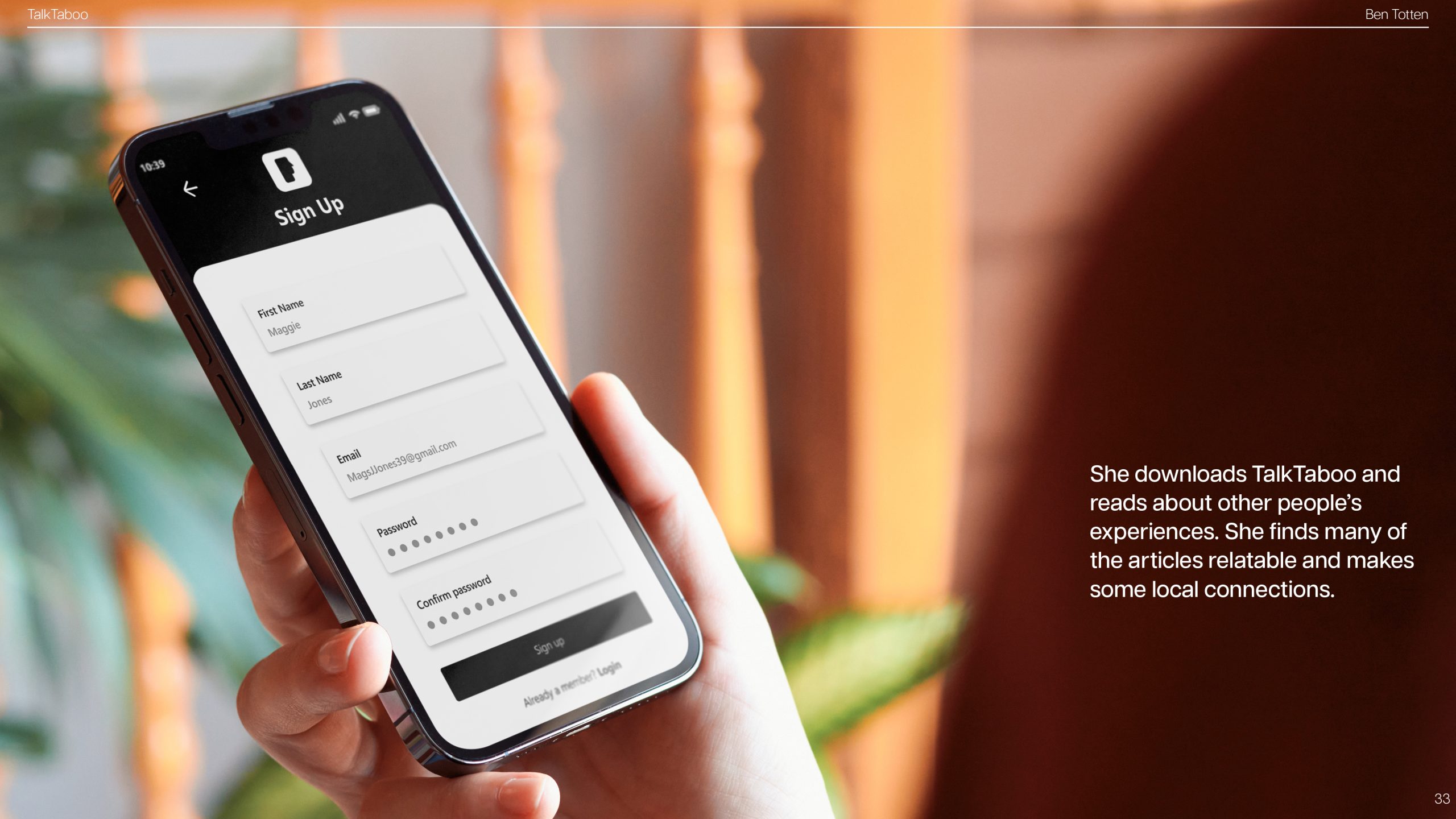
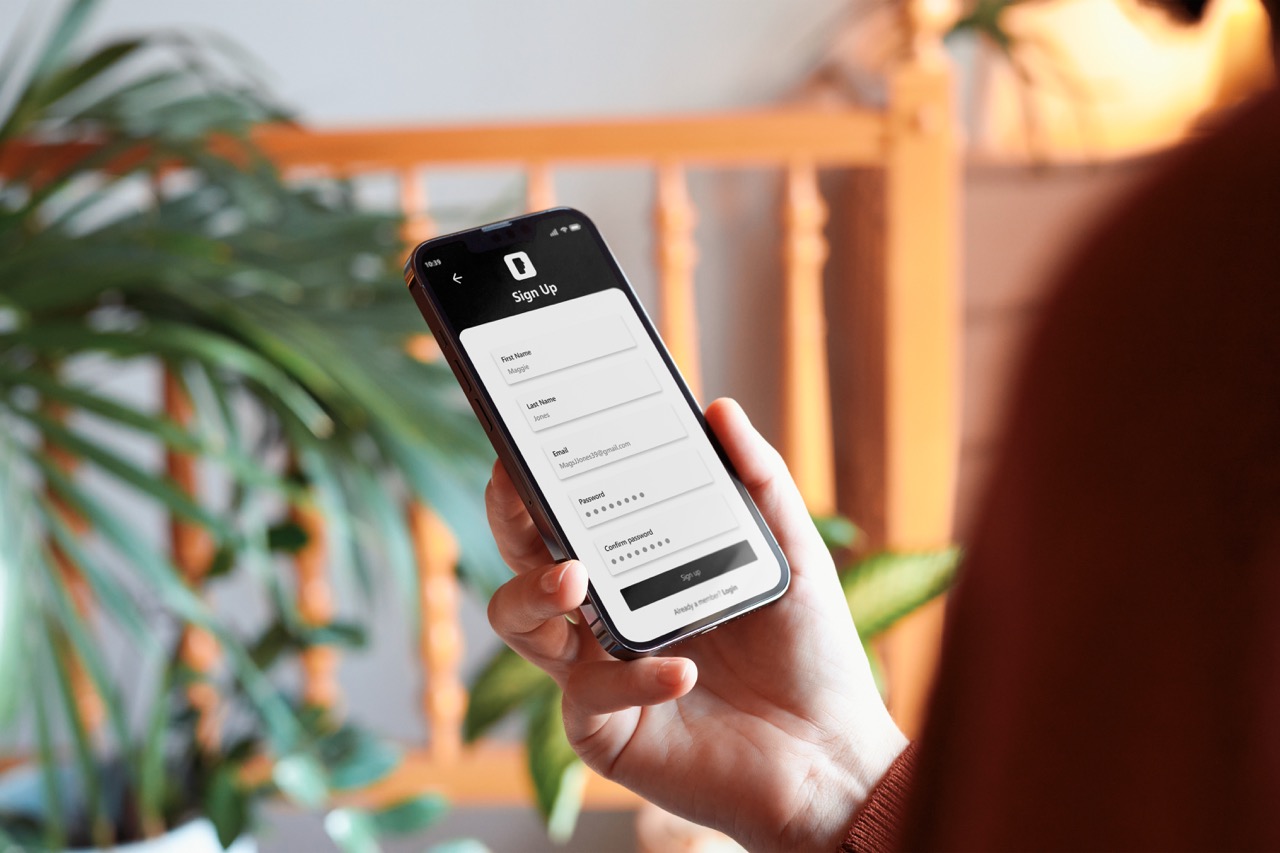
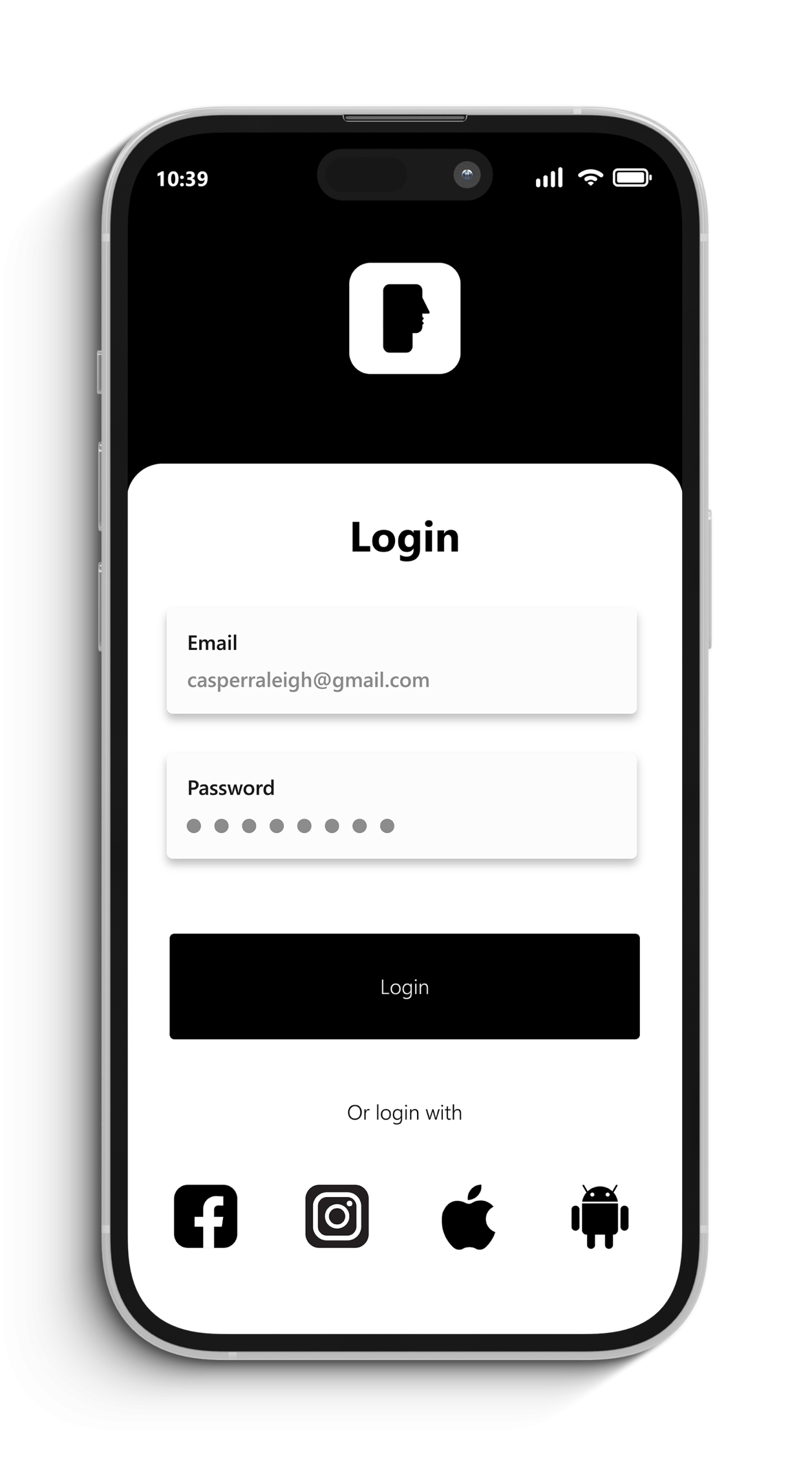
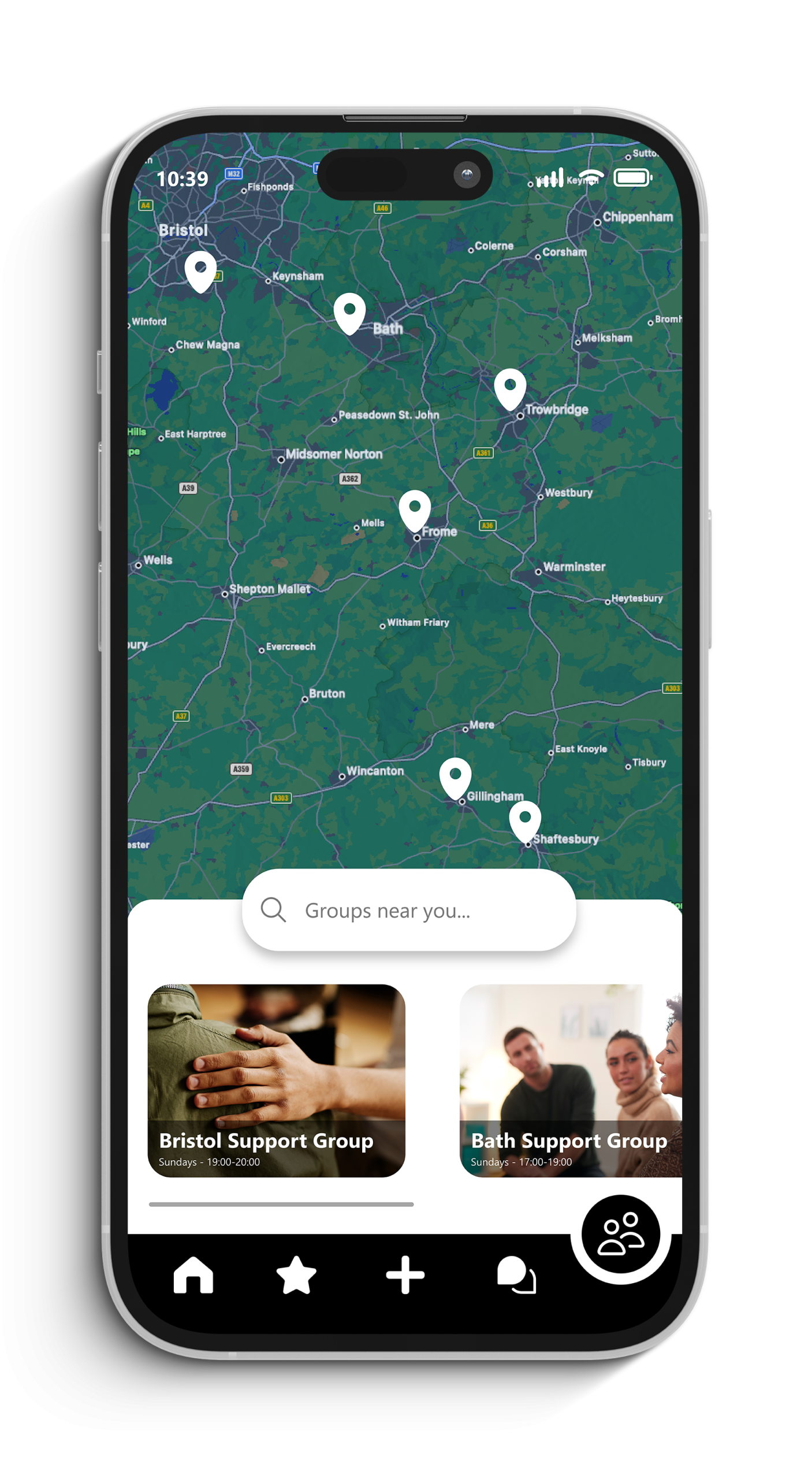
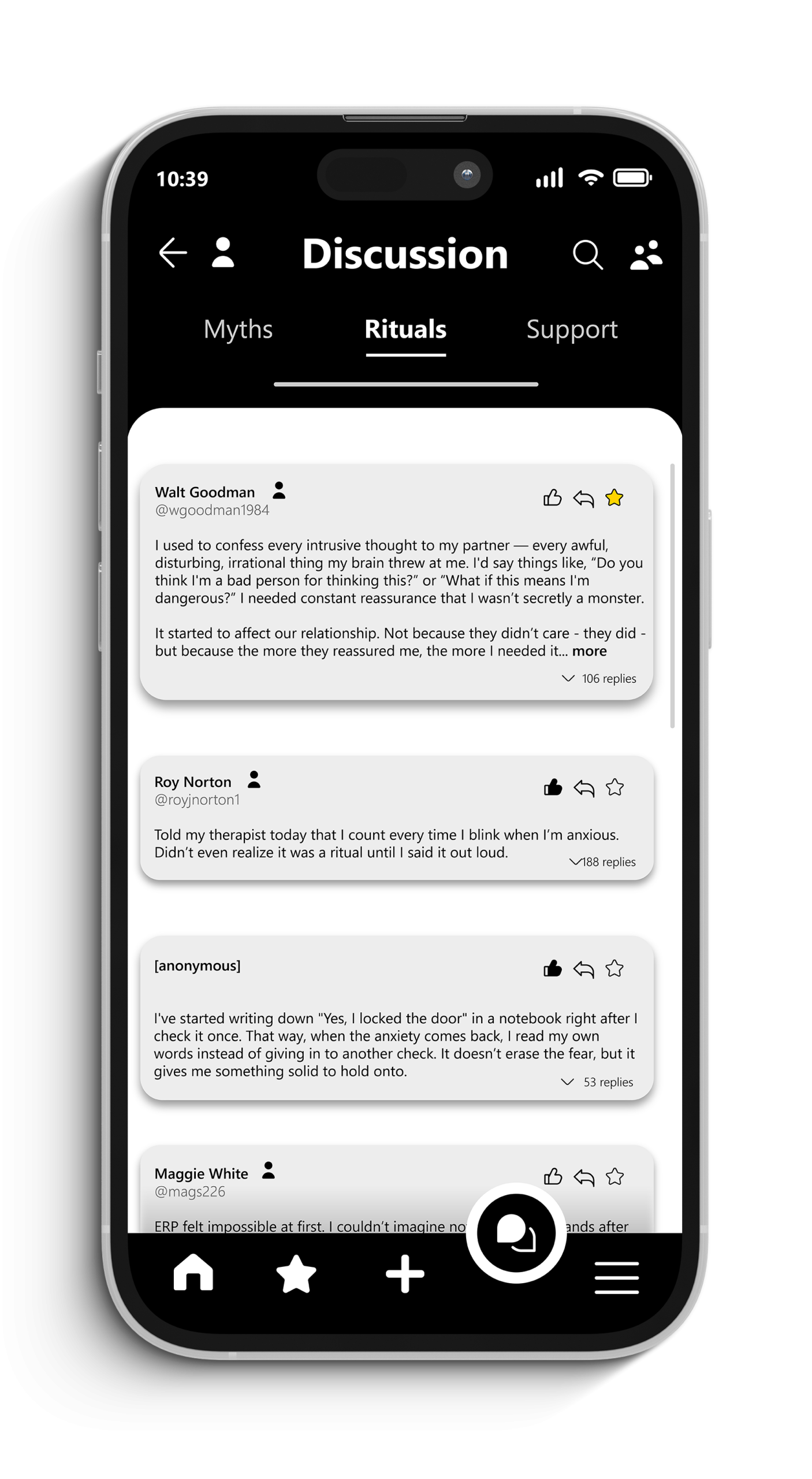
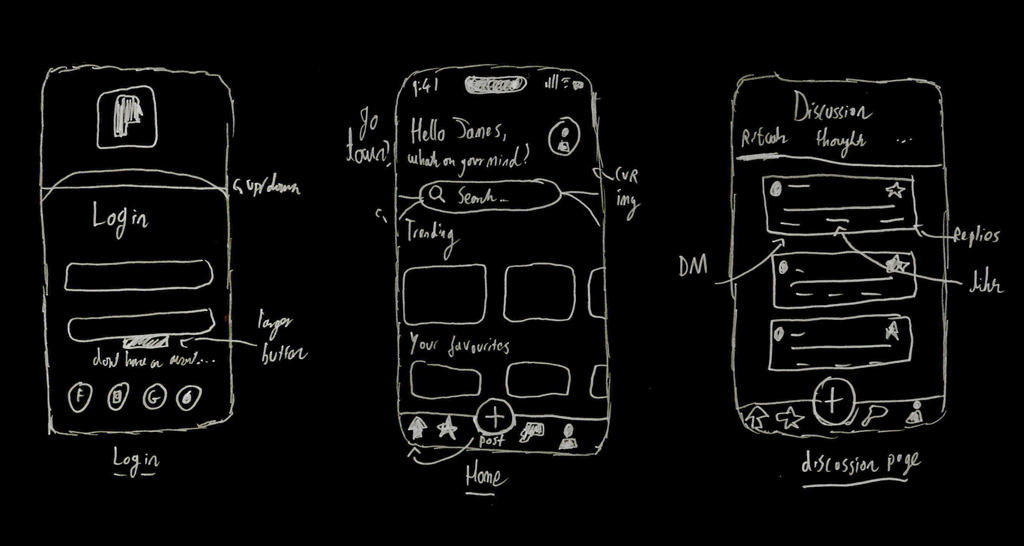
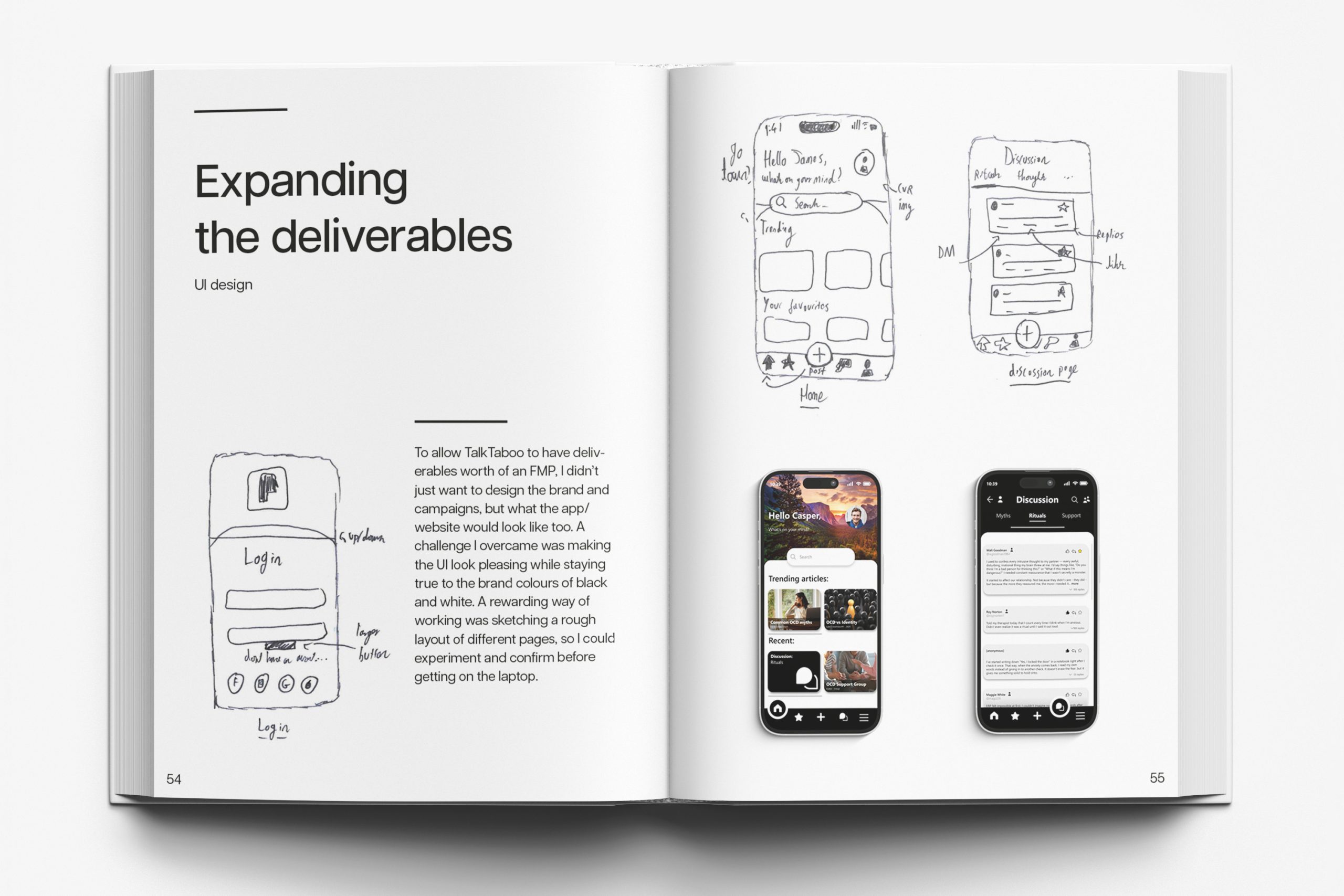
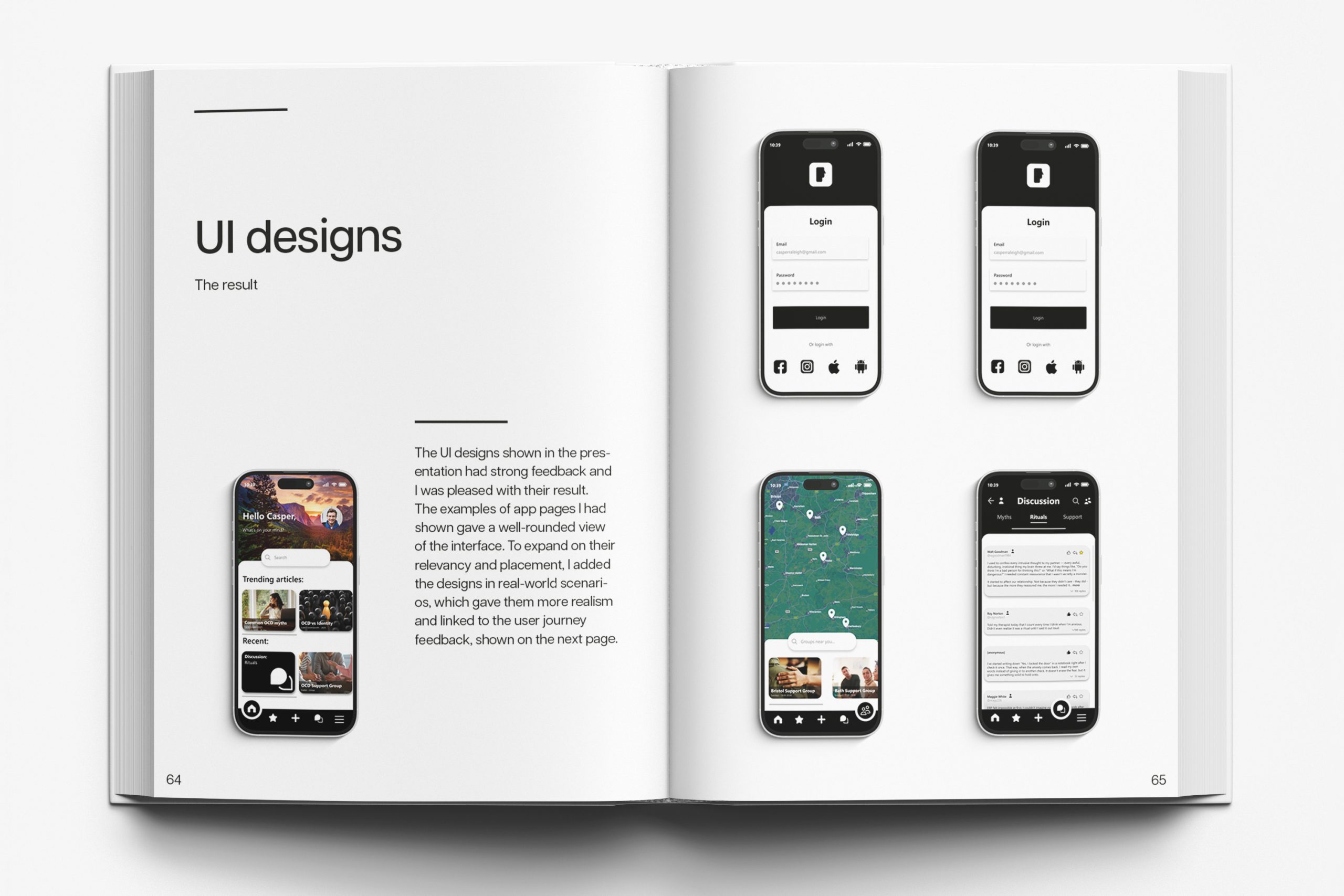
Throughout the course of the final major projects, I feel I structured my time well and managed to meet two competition deadlines while working on TalkTaboo. If I had more time to work on this project, I would gather user responses, as mentioned previously, to make the concept airtight and additionally apropos. The UI of TalkTaboo would also be expanded, and the online space the designs depict would be brought to life in a functional app and website. This would make TalkTaboo's concept more immersive and allow me to expand my UI design skills.
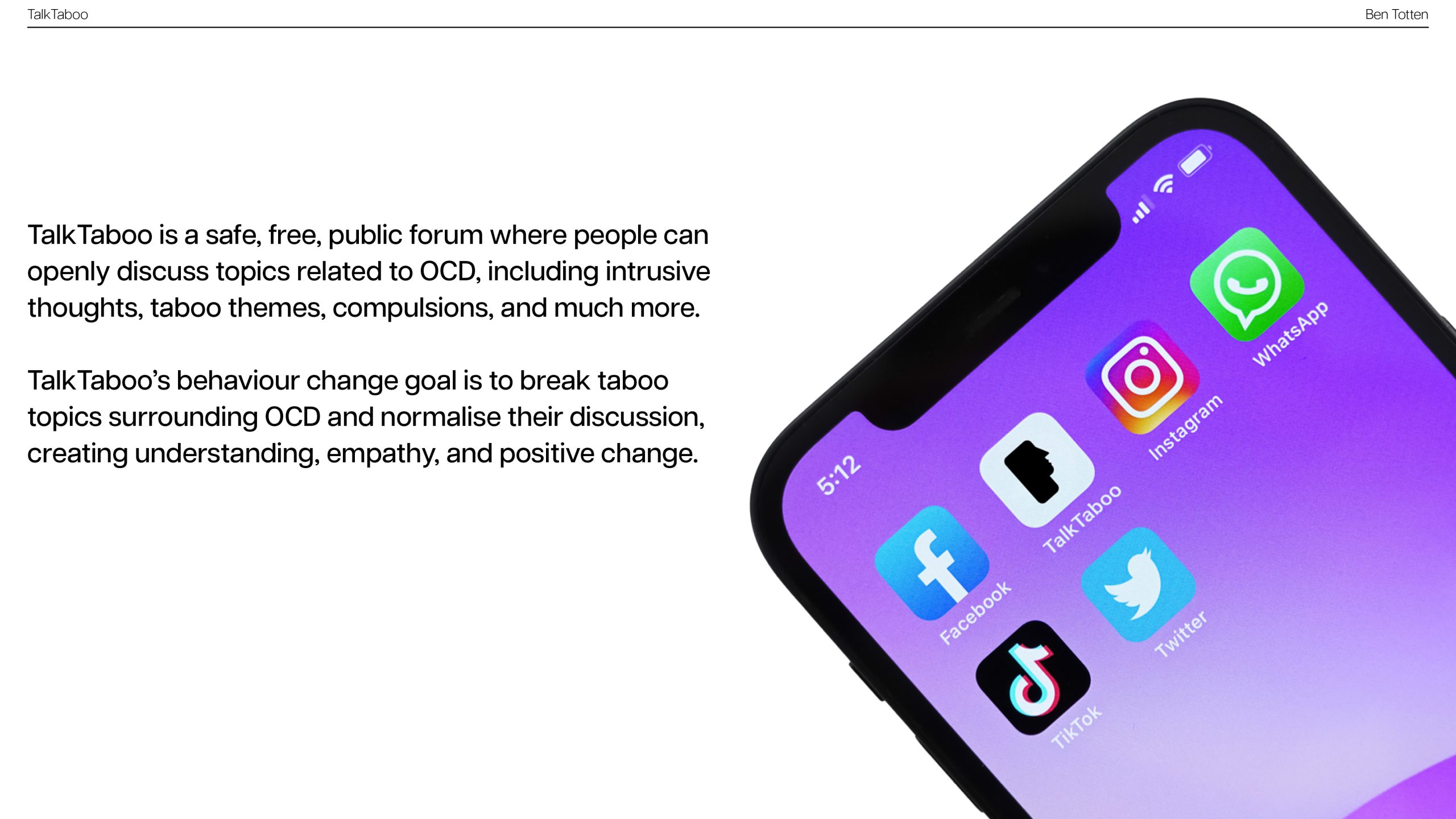
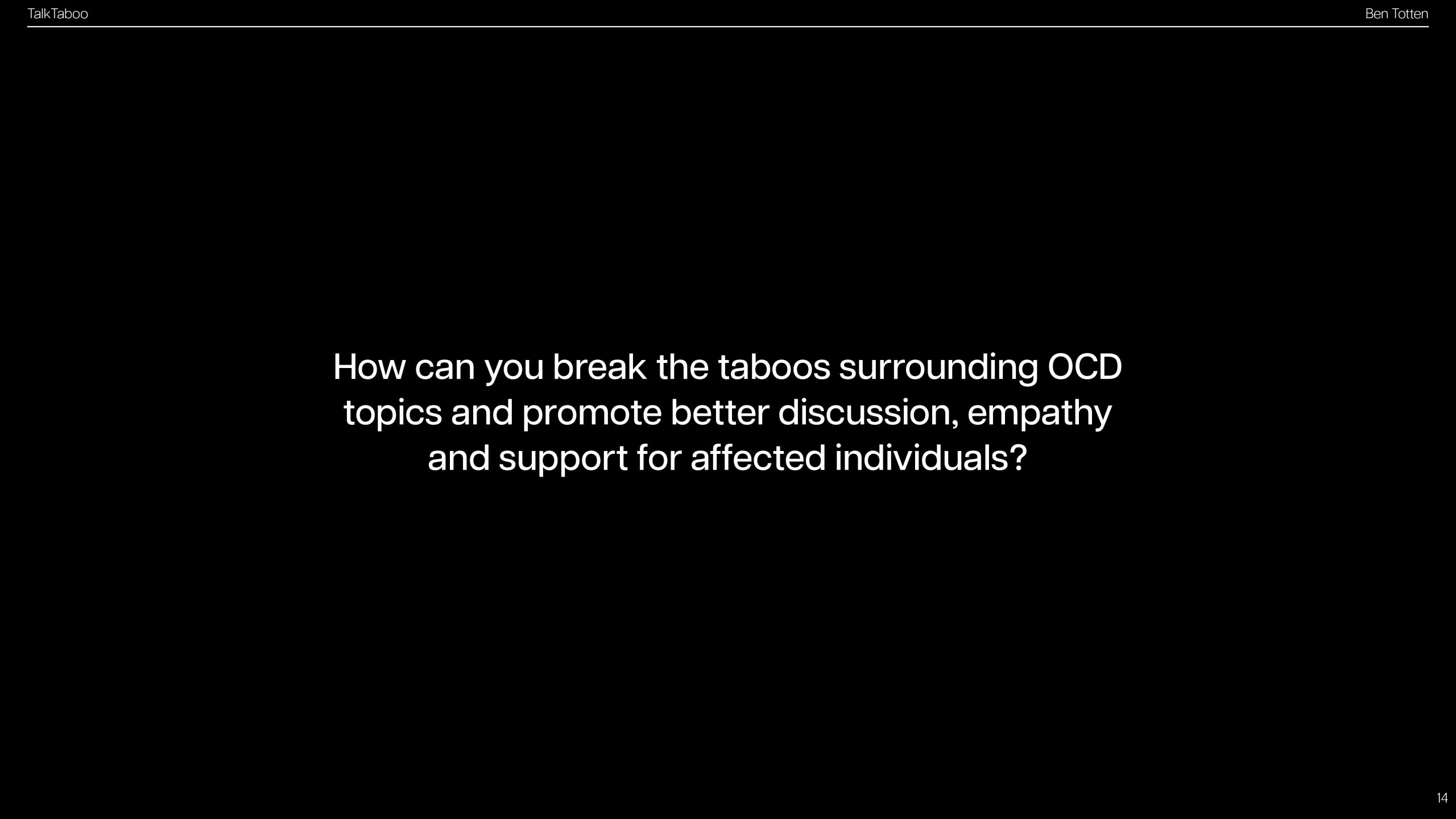
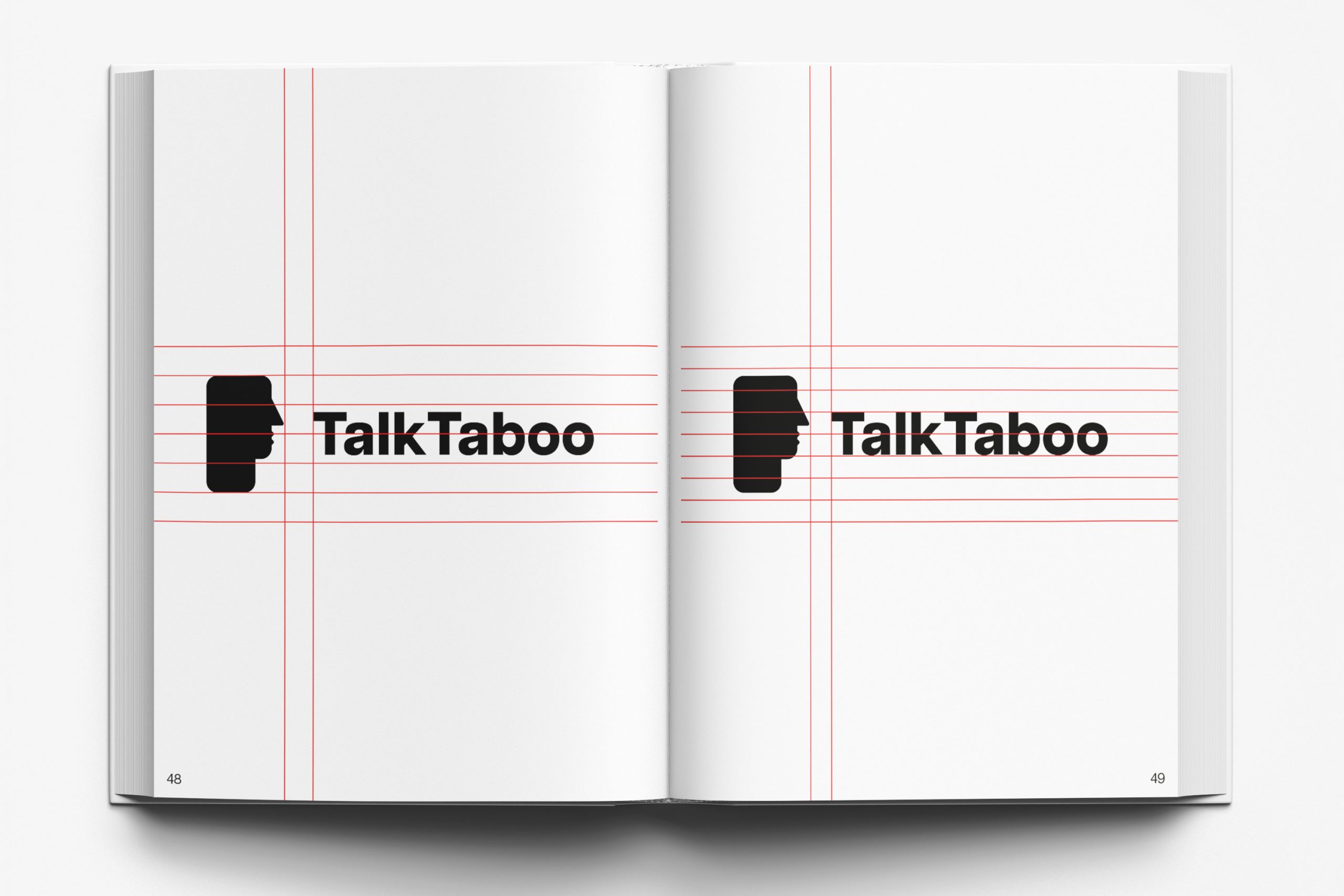
In conclusion, TalkTaboo addresses the serious need to facilitate healthy discussion and combat taboo themes in OCD and even neurodiversity as a whole. Through its identity, professional affiliation and strategy, TalkTaboo can enable a range of audiences to stop suffering in silence and find the support they deserve. I was very pleased with the outcome of this project, as well as the two competition briefs I completed alongside it. The skills in strategy and research I developed as a result of TalkTaboo will be invaluable moving forward.